Used hydraulic distributor
597 produits disponibles
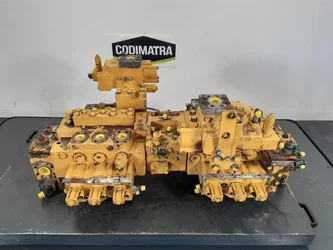
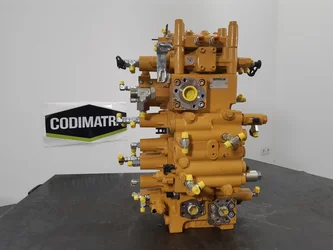
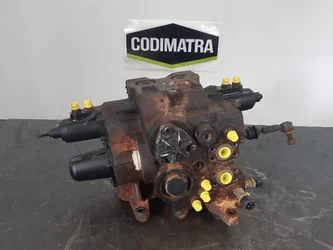
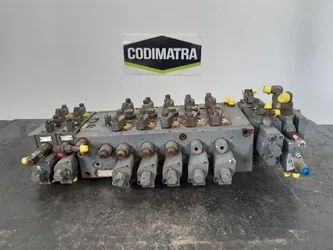
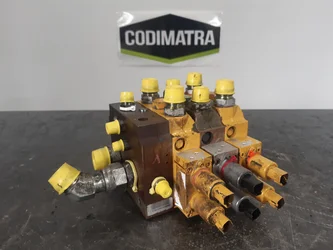
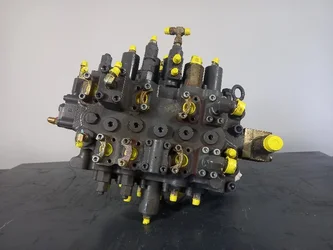
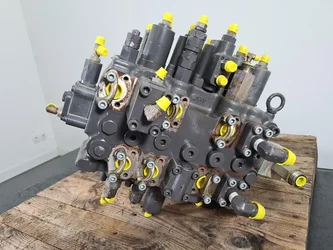
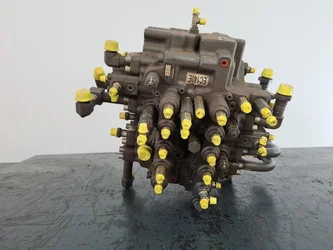
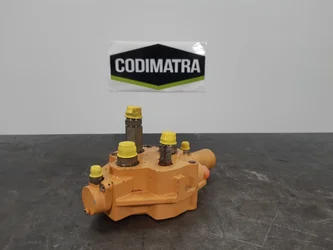
The hydraulic distributor directs pressurized oil flow to the hydraulic cylinders and motors of your construction machinery: mini-excavator bucket, loader arm, crane boom. Its condition directly affects the power, accuracy, and responsiveness of your equipment. At Codimatra, you will find used hydraulic distributors from carefully selected machines, dismantled and tested in our workshop by our technicians. With over 40 years of expertise in construction equipment spare parts and approximately 17,000 references available, we assist you in identifying the suitable replacement part to get your machine back in service quickly.
![Hydraulic Distributor for LIEBHERR A316]()
Hydraulic Distributor for LIEBHERR A316
As-is price :3 000,00 €Request a quote![Hydraulic Distributor for CATERPILLAR 315FLCR]()
Hydraulic Distributor for CATERPILLAR 315FLCR
As-is price :8 000,00 €Request a quote![Hydraulic Distributor for CATERPILLAR 772]()
Hydraulic Distributor for CATERPILLAR 772
As-is price :8 000,00 €Request a quote![Hydraulic Distributor for CATERPILLAR 771D]()
Hydraulic Distributor for CATERPILLAR 771D
As-is price :8 000,00 €Request a quote![Hydraulic Distributor for LIEBHERR A314]()
Hydraulic Distributor for LIEBHERR A314
As-is price :5 500,00 €Request a quote![Hydraulic Distributor for VOLVO L30G]()
Hydraulic Distributor for VOLVO L30G
As-is price :3 000,00 €Request a quote![Hydraulic distributor for LIEBHERR LH22M]()
Hydraulic distributor for LIEBHERR LH22M
As-is price :7 000,00 €Request a quote![Hydraulic distributor for CATERPILLAR 374DL]()
Hydraulic distributor for CATERPILLAR 374DL
As-is price :15 000,00 €Request a quote![Hydraulic distributor for CATERPILLAR 325FLCR]()
Hydraulic distributor for CATERPILLAR 325FLCR
As-is price :7 000,00 €Request a quote![Hydraulic distributor for VOLVO A25E]()
Hydraulic distributor for VOLVO A25E
As-is price :5 000,00 €Request a quote![DISTRIBUTEUR HYDRAULIQUE]()
DISTRIBUTEUR HYDRAULIQUE
As-is price :3 500,00 €Request a quote![Hydraulic distributor for CATERPILLAR 323F]()
Hydraulic distributor for CATERPILLAR 323F
As-is price :5 000,00 €Request a quote![Hydraulic distributor for CATERPILLAR 308E2CR]()
Hydraulic distributor for CATERPILLAR 308E2CR
As-is price :4 000,00 €Request a quote![Hydraulic distributor for CATERPILLAR 769D]()
Hydraulic distributor for CATERPILLAR 769D
As-is price :8 350,00 €Request a quote![Hydraulic distributor for KOMATSU PC228USLC-11]()
Hydraulic distributor for KOMATSU PC228USLC-11
As-is price :5 500,00 €Request a quote![Hydraulic distributor for CATERPILLAR 918M]()
Hydraulic distributor for CATERPILLAR 918M
As-is price :4 000,00 €Request a quote![Hydraulic distributor for VOLVO ECR235DL]()
Hydraulic distributor for VOLVO ECR235DL
As-is price :7 500,00 €Request a quote![Hydraulic distributor for VOLVO ECR235DL]()
Hydraulic distributor for VOLVO ECR235DL
As-is price :7 500,00 €Request a quote![Hydraulic distributor for VOLVO ECR145EL]()
Hydraulic distributor for VOLVO ECR145EL
As-is price :7 000,00 €Request a quote![Hydraulic distributor for CATERPILLAR 924H]()
Hydraulic distributor for CATERPILLAR 924H
As-is price :2 500,00 €Request a quote![Hydraulic distributor for CATERPILLAR 314C]()
Hydraulic distributor for CATERPILLAR 314C
As-is price :5 000,00 €Request a quote![Hydraulic distributor for CATERPILLAR 314CLCR]()
Hydraulic distributor for CATERPILLAR 314CLCR
As-is price :6 500,00 €Request a quote![Hydraulic distributor for CATERPILLAR D6RXL]()
Hydraulic distributor for CATERPILLAR D6RXL
As-is price :6 000,00 €Request a quote![Hydraulic distributor for CATERPILLAR 322C]()
Hydraulic distributor for CATERPILLAR 322C
As-is price :4 500,00 €Request a quote![Hydraulic Distributor for CATERPILLAR 950G]()
Hydraulic Distributor for CATERPILLAR 950G
Request a quote![Hydraulic Distributor for CATERPILLAR 950G]()
Hydraulic Distributor for CATERPILLAR 950G
Request a quote![Hydraulic Distributor for CATERPILLAR 325LN]()
Hydraulic Distributor for CATERPILLAR 325LN
Request a quote![Hydraulic Distributor for MECALAC 11MWR]()
Hydraulic Distributor for MECALAC 11MWR
Request a quote![Hydraulic Distributor for LIEBHERR R936NLC]()
Hydraulic Distributor for LIEBHERR R936NLC
Request a quote![Hydraulic Distributor for CATERPILLAR 980M]()
Hydraulic Distributor for CATERPILLAR 980M
Request a quote![Hydraulic Distributor for CATERPILLAR 966MXE]()
Hydraulic Distributor for CATERPILLAR 966MXE
Request a quote![Hydraulic Distributor for VOLVO L120F]()
Hydraulic Distributor for VOLVO L120F
Request a quote![Hydraulic Distributor for HITACHI ZX85USBLCN-3]()
Hydraulic Distributor for HITACHI ZX85USBLCN-3
Request a quote![Hydraulic Distributor for HITACHI ZX250LCN-3]()
Hydraulic Distributor for HITACHI ZX250LCN-3
Request a quote![Hydraulic Distributor for CATERPILLAR 314CLCR]()
Hydraulic Distributor for CATERPILLAR 314CLCR
Request a quote![Hydraulic distributor for CASE WX200]()
Hydraulic distributor for CASE WX200
Request a quote
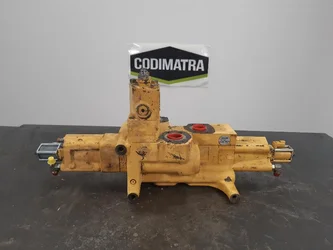
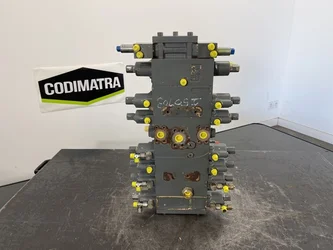
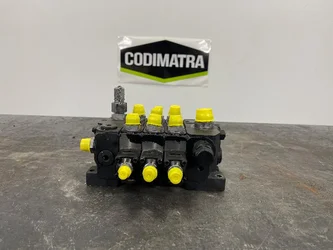
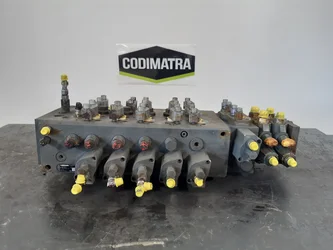
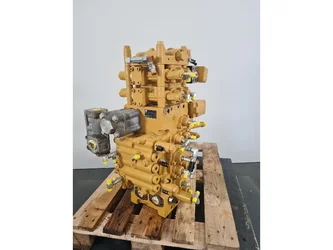
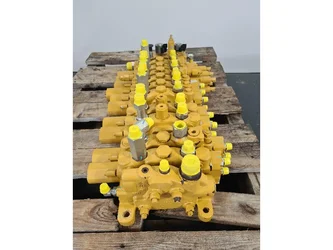
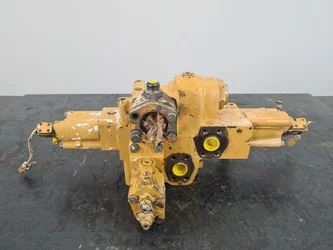
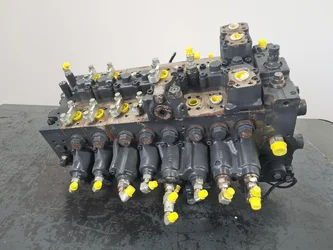
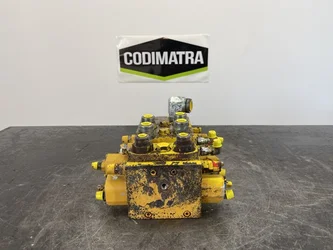
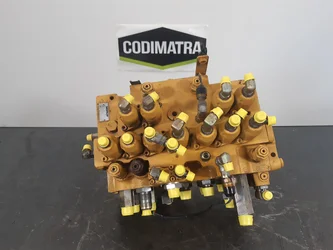
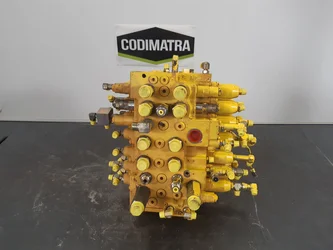
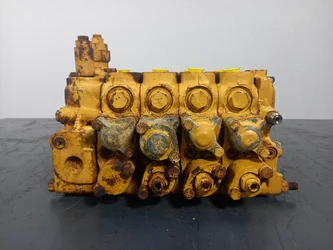
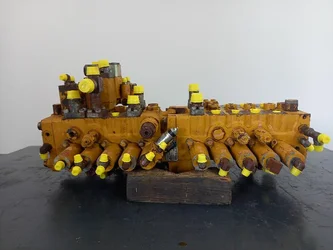
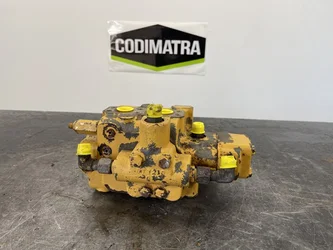
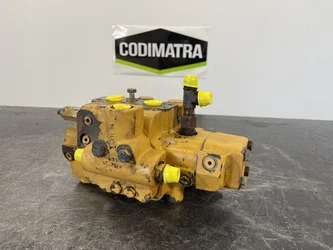
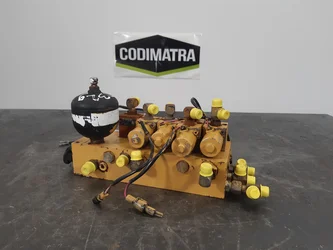
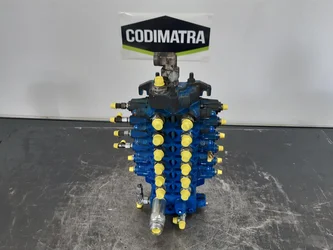
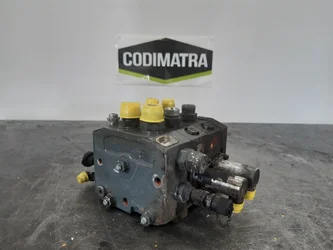
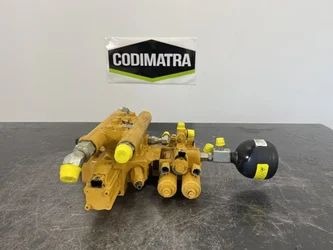
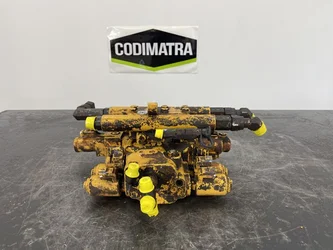
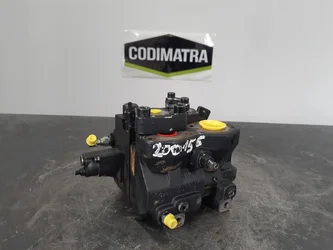
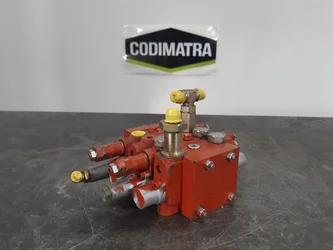
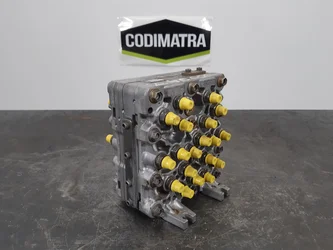
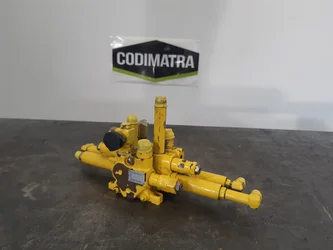
How a hydraulic distributor works
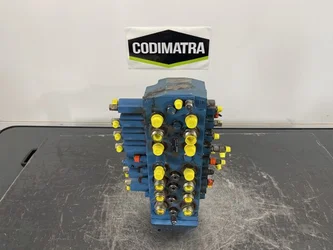
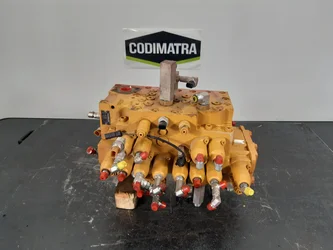
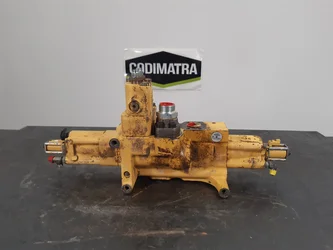
The distributor is the crossroads of your machine's hydraulic circuit. It receives high-pressure oil from the pump outlet and directs it to the selected actuator (arm and bucket cylinders, travel motors, rotation motors) according to the position of one or more internal spools. The distributor body houses these spools: by sliding within their bore, they open and close calibrated passages that control the direction of the oil flow and, on proportional models, the flow rate intensity.
A malfunction of the hydraulic distributor (cylinder drift, unusual slowness, lack of pressure response) usually indicates wear on the spools or internal seals, even before mechanical failure. Detecting such defects early helps prevent prolonged downtime of construction machinery.
Double-acting, single-acting: distributor configurations
The two main families of distributors differ by their ability to supply one or two chambers of a cylinder.
- Double-acting hydraulic distributor: oil flows in both directions to the cylinder, enabling active movement in both directions. This is the standard setup for mini-excavators, hydraulic excavators, loaders, and telehandlers. More common in construction machinery, it provides force and precise cycle control in both directions.
- Single-acting hydraulic distributor: only one cylinder chamber is supplied, with return by gravity or a return spring. It is used in specific applications: leveling blades, auxiliary arms, certain attachments. It offers a cost-effective replacement when single-direction movement suffices.
- Cross hydraulic distributor (open center position): the spool's neutral position allows oil flow to circulate freely, preventing unintended pressure build-up in neutral. Used hydraulic open center distributors are available for excavators and loaders from various brands.
Ports, sections, and hydraulic distributor schematic
The number of ports and spool positions is indicated directly on the hydraulic distributor schematic per ISO 1219. A 4/2 distributor (4 ports, 2 positions) controls a double-acting circuit in its basic configuration. A 4/3 distributor (4 ports, 3 positions) adds a neutral position that isolates or freely connects the circuit. Construction machinery typically uses multi-section blocks that combine several hydraulic distributors within one body to simultaneously control multiple actuators.
To select the right port configuration, check the nominal flow rate (L/min) and maximum allowable pressure (bar) marked on the original distributor’s nameplate. These parameters take precedence over mere mounting compatibility.
Hydraulic distributor control types
The spool control method is as important a selection criterion as the hydraulic configuration.
Manual hydraulic distributor
The lever or handle mechanically actuates the spool without electronics. This is the most robust solution for compact machines and quick-attach accessories. A factory-checked used manual hydraulic distributor is often the most cost-effective replacement for equipment that does not require remote control.
12V and 24V electric hydraulic distributor
A solenoid (electromagnet) receives an electrical signal to move the spool. The 12V electric hydraulic distributor equips most compact and light machines (mini-excavators, dumpers, forklifts). The 24V version is standard on heavy machines (excavators of 20 tons and above, wheeled loaders). Before purchasing a used electric hydraulic distributor, verify your system’s supply voltage: a 24V solenoid will not operate on a 12V system.
Proportional hydraulic distributor
The proportional distributor modulates spool opening according to the received signal, allowing precise dosing of flow and actuator speed. It is found on electrohydraulic controlled machines (proportional joystick), telescopic cranes, and equipment requiring fine control. When replacing a used unit, compatibility with the onboard control module must be verified before installation.
Key points to choose your used hydraulic distributor
- Circuit type: double-acting (standard in construction equipment) or single-acting depending on application and actuators to control
- Supply voltage: 12V for light and compact machines, 24V for heavy machinery
- Number of ports and sections: match with the original hydraulic schematic
- Control type: manual, electrohydraulic, or proportional according to onboard control system
- Manufacturer reference: brand, model, and serial number of the machine to confirm flow and pressure compatibility
- Distributor body condition: check that bore surfaces have no scratches or deformation before installation
Hydraulic distributor hookup diagram for loader or mini-excavator
For a loader distributor hookup, identify the four main ports: P (pump pressure), T (tank return), A and B (to actuators). The P port receives oil from the pump, the T port returns unused oil to the tank, and A and B supply the two cylinder chambers depending on spool position.
On a sectional block hydraulic distributor for mini-excavators, each section corresponds to one motion of the machine (left/right travel, rotation, arm, bucket). Reversed hookup does not immediately damage the circuit but reverses movement direction. Low flow testing prior to full pressure build-up is essential to confirm control consistency.
Hydraulic distributor spool: the key wear part
The spool is the moving part sliding inside the distributor body bore to open or close oil passages. It’s the primary wear component to inspect if you notice cylinder drift under load (unintended movement without control input), power loss, or control imprecision. High-pressure cycles enlarge clearances between spool and bore, causing internal leaks.
On some common models, the spool alone can be replaced. On others, replacing the complete used distributor body is better to restore original clearance and ensure reliable long-term function.
Used hydraulic distributors for mini-excavators, loaders, and cranes
Each equipment type has its own flow, pressure, and distributor configuration requirements.
For mini-excavators (1 to 6 tons), the main distributor block controls travel, turret rotation, arm, and bucket simultaneously. Compatibility is tight between brands and models: find our used distributors for JCB , Caterpillar , Liebherr or Volvo TP in our catalog.
For wheeled loaders and backhoe loaders, the hydraulic distributor feeds the arm, bucket cylinders, and front attachments. A used Case or Volvo distributor in good condition can restore a stalled machine at a significantly lower cost than a new part.
For a crane hydraulic distributor kit (boom, jib, or auxiliary truck crane), ensure the chosen distributor matches the flow allowed by the safety valve and the solenoid supply voltage.
Used hydraulic distributors at Codimatra
- Parts from selected dismantlings, tested in our workshop before shipment
- Used double-acting, single-acting, 12V/24V electric, proportional, and open-center distributors available
- Stock covering major construction equipment brands: JCB, Volvo, Liebherr, Case, Bobcat, Komatsu, Mecalac
- Personalized advice: provide brand, model, and original reference to confirm flow and pressure compatibility
- Fast delivery to minimize downtime of your construction machinery
A hydraulic distributor directs the high-pressure oil flow from the pump to actuators (cylinders, hydraulic motors) by moving internal spools. Depending on the spool position, passages open or close to control movement direction and, on proportional models, flow intensity. The distributor body houses these spools and internal oil distribution channels.
A single-acting distributor supplies only one cylinder chamber, with return through gravity or a spring. A double-acting distributor supplies both chambers, allowing active movement in both directions. Double-acting is standard on construction equipment (mini-excavators, excavators, loaders) as it delivers force and precision in both working directions.
The solenoid voltage must match your machine's electrical system. Compact and light machines typically operate on 12V, while heavy equipment (excavators of 20 tons and above, wheeled loaders) use 24V. Check the manufacturer's plate or your machine's electrical diagram before ordering a used electric hydraulic distributor.
A cylinder drift under load (unintended movement without control input) usually indicates spool wear or internal sealing failure. Check distributor inlet pressure: if the pump maintains pressure and the cylinder moves alone, the distributor causes an internal leak. Replacing the spool or the entire used distributor typically resolves this issue.
Identify the four ports: P (pump pressure), T (tank return), A and B (to actuators). Connect P and T first, then A and B referring to the original hookup diagram. Conduct a low flow test before full pressure to verify movement directions. Without a diagram, our team can assist in identifying the original configuration from the distributor reference.