Used Steering Orbitrol
51 produits disponibles
A stiff steering wheel, pulling to one side, or a leak at the base of the column often points to the orbitrol. Our steering orbitrols are removed from wheel loaders, wheeled excavators, and backhoe loaders, then tested at the Codimatra workshop in Castelculier before sale. With over 40 years of experience in construction machinery hydraulics, we guide you to the right reference.
![Multi-purpose-bucket for VOLVO L45G]()
Multi-purpose-bucket for VOLVO L45G
As-is price :1 000,00 €Request a quote![Multi-purpose-bucket for VOLVO L120E]()
Multi-purpose-bucket for VOLVO L120E
As-is price :1 000,00 €Request a quote![ORBITROL]()
ORBITROL
As-is price :1 000,00 €Request a quote![ORBITROL]()
ORBITROL
As-is price :1 000,00 €Request a quote![Multi-purpose-bucket for MECALAC 11MWR]()
Multi-purpose-bucket for MECALAC 11MWR
Request a quote![Multi-purpose-bucket for LIEBHERR LH22M]()
Multi-purpose-bucket for LIEBHERR LH22M
Request a quote![Multi-purpose-bucket for MECALAC 12MXT]()
Multi-purpose-bucket for MECALAC 12MXT
Request a quote![ORBITROL]()
ORBITROL
Request a quote![ORBITROL (DIRECTION HYDROSTATIQUE)]()
ORBITROL (DIRECTION HYDROSTATIQUE)
Request a quote![ORBITROL]()
ORBITROL
Request a quote![ORBITROL]()
ORBITROL
Request a quote![ORBITROL]()
ORBITROL
Request a quote![ORBITROL]()
ORBITROL
Request a quote![ORBITROL]()
ORBITROL
Request a quote![Multi-purpose-bucket for VOLVO EW140D]()
Multi-purpose-bucket for VOLVO EW140D
As-is price :1 000,00 €Request a quote![Multi-purpose-bucket for VOLVO L180G]()
Multi-purpose-bucket for VOLVO L180G
As-is price :900,00 €Request a quote![Multi-purpose-bucket for CATERPILLAR 938H]()
Multi-purpose-bucket for CATERPILLAR 938H
As-is price :1 000,00 €Request a quote![Multi-purpose-bucket for LIEBHERR L538]()
Multi-purpose-bucket for LIEBHERR L538
As-is price :750,00 €Request a quote![Multi-purpose-bucket for CASE WX150]()
Multi-purpose-bucket for CASE WX150
As-is price :750,00 €Request a quote![Multi-purpose-bucket for LIEBHERR A314]()
Multi-purpose-bucket for LIEBHERR A314
As-is price :500,00 €Request a quote![ORBITROL]()
ORBITROL
As-is price :1 000,00 €Request a quote![ORBITROL]()
ORBITROL
As-is price :600,00 €Request a quote![Multi-purpose-bucket for LIEBHERR L580 XPOWER]()
Multi-purpose-bucket for LIEBHERR L580 XPOWER
Request a quote![Multi-purpose-bucket for CATERPILLAR 966MXE]()
Multi-purpose-bucket for CATERPILLAR 966MXE
Request a quote![Multi-purpose-bucket for VOLVO A25D]()
Multi-purpose-bucket for VOLVO A25D
Request a quote![Multi-purpose-bucket for CATERPILLAR 772]()
Multi-purpose-bucket for CATERPILLAR 772
Request a quote![Multi-purpose-bucket for LIEBHERR L556]()
Multi-purpose-bucket for LIEBHERR L556
Request a quote![Multi-purpose-bucket for CASE WX165]()
Multi-purpose-bucket for CASE WX165
Request a quote![Multi-purpose-bucket for KOMATSU PW160-7K]()
Multi-purpose-bucket for KOMATSU PW160-7K
Request a quote![Multi-purpose-bucket for LIEBHERR A311LI]()
Multi-purpose-bucket for LIEBHERR A311LI
Request a quote![Multi-purpose-bucket for LIEBHERR A924]()
Multi-purpose-bucket for LIEBHERR A924
Request a quote![ORBITROL]()
ORBITROL
Request a quote![ORBITROL]()
ORBITROL
Request a quote![ORBITROL]()
ORBITROL
Request a quote![ORBITROL]()
ORBITROL
Request a quote![ORBITROL]()
ORBITROL
Request a quote
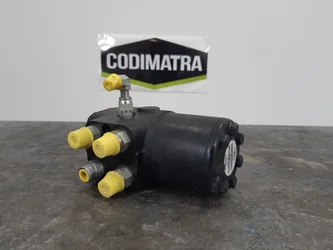
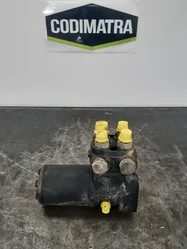
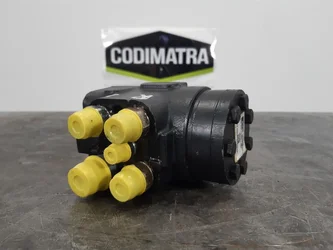
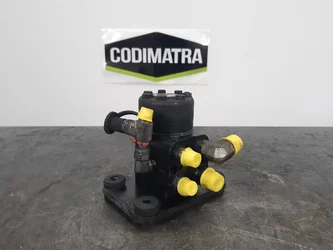
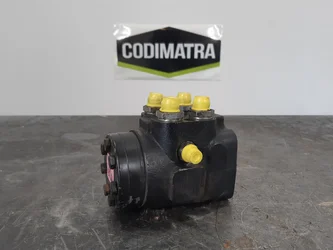
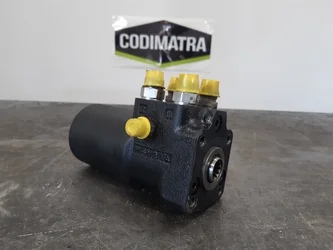
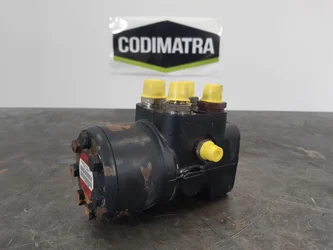
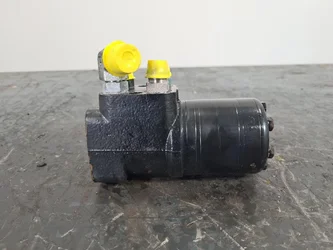
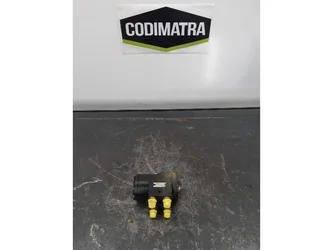
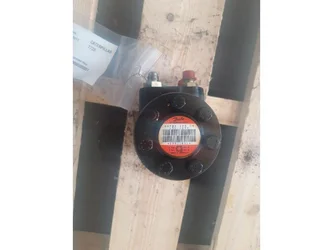
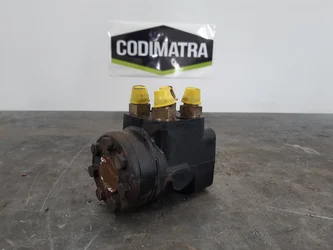
Operation and diagram of a steering orbitrol
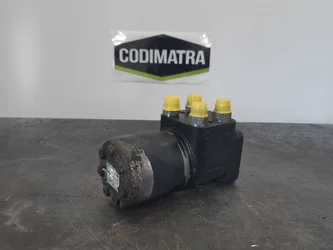
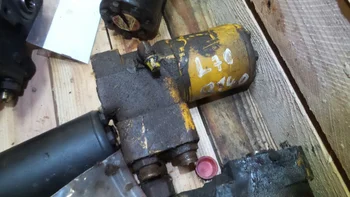
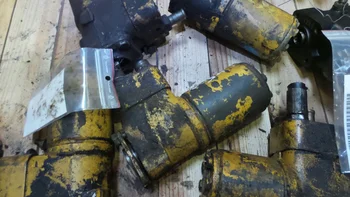
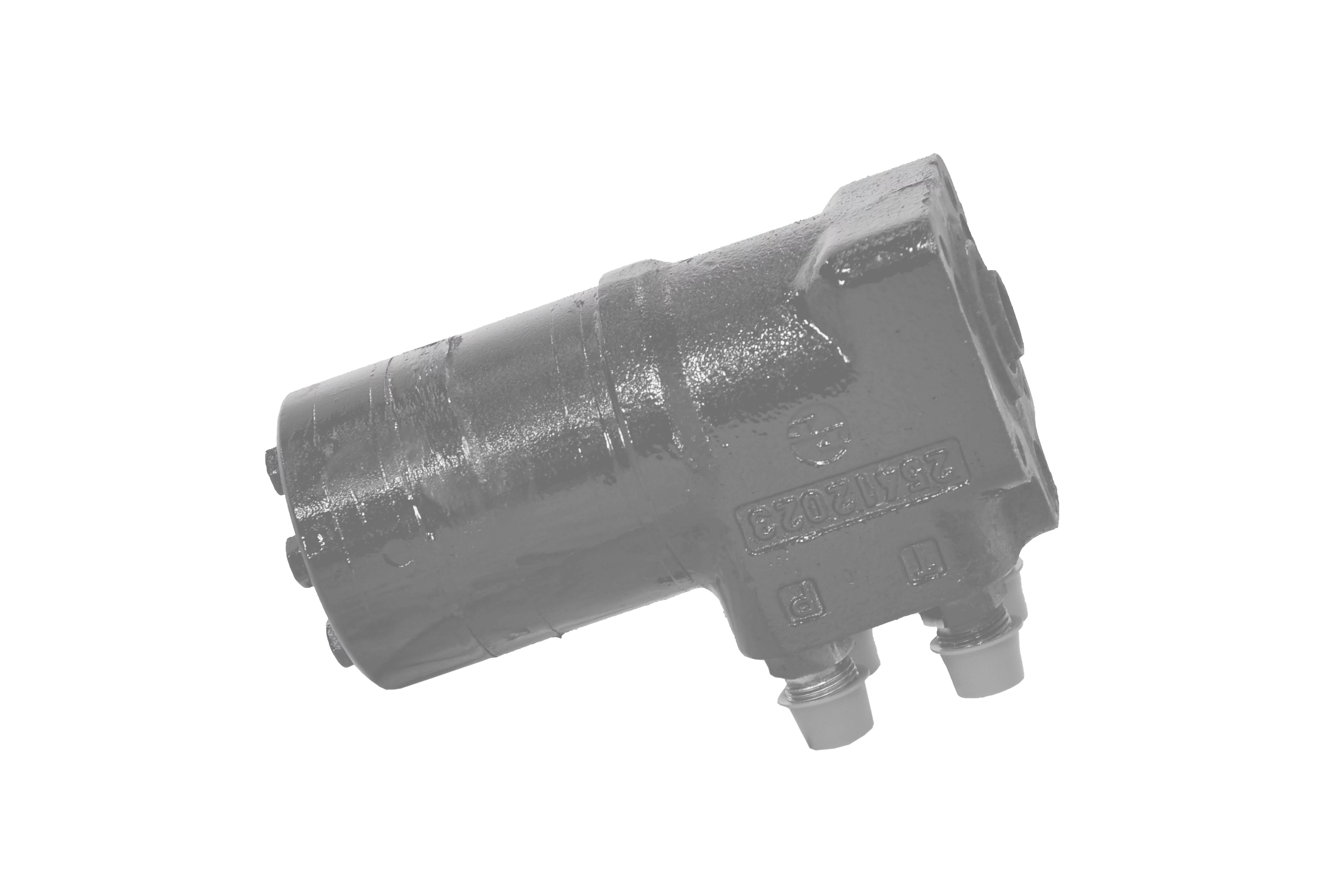
The orbitrol is the hydrostatic steering unit, a hydraulic power steering system that replaces the traditional rack and mechanical linkage: mounted at the base of the steering column, it controls the oil flow sent to the steering cylinders according to the steering wheel rotation. Thus, there is no mechanical connection between the steering wheel and the wheels. Powered by the hydraulic pump, it amplifies the operator's effort; in case of pump failure, it operates as a manual backup pump, making the steering wheel much harder to turn.
Diagram: Ports P, T, L, and R
On the hydraulic diagram of an orbitrol, port P receives oil from the pump, port T returns it to the reservoir, and ports L and R supply the cylinder to turn left or right. Steering wheel movement drives a rotary spool and a metering device that sends an oil volume proportional to the rotation angle. Depending on the machine, the orbitrol is open center (ON), closed center (CN), or load sensing (LS), combined with a priority valve, also called a priority valve, which feeds the steering first. It comes in a reaction version, where the wheel senses the tire forces and tends to return to center, or non-reaction, common on articulated loaders. The Danfoss OSPB and OSPC ranges are among the most widespread on loaders, forklifts, and handling machines.
Used steering orbitrol: brands and models
- Volvo: L110F and L120E loaders
- Komatsu, Caterpillar, and JCB: loaders, wheeled excavators, and backhoe loaders depending on stock
- New Holland and Case: depending on machines dismantled
- Steering orbitrols and steering controls identified by cylinder and connection type
Diagnosis: signs of a failing steering orbitrol
A stiff steering wheel while the pump and oil level are fine, significant play in the steering wheel, steering that does not return to center or "drifts" on its own often indicate a worn orbitrol. A leak at the input shaft signals worn seals. Have the pressure, priority valve, and steering cylinders checked first before concluding.
Steering orbitrol by tractor brand: Renault, Massey Ferguson
Codimatra specializes in public works machinery. For a tractor or agricultural machinery steering orbitrol from Renault, Massey Ferguson or other brands, please refer to the used hydraulic range from TMC Bejenne, a Dubreuil group company specializing in tractor parts.
Reference, cylinder, splines: important details
- The reference engraved on the orbitrol body
- The cylinder size, number and type of connections
- The spline on the input shaft side column
- The circuit type: open center, closed center, or load sensing with priority valve
- The model and serial number of the machine
Have your orbitrol identified
Provide the orbitrol's reference, brand, model, and serial number of your machine. Our advisors verify compatibility among our around 17,000 references and respond at 05 18 23 21 34. Also check out the hydraulic distributors and the full range of used hydraulics.
It is the hydraulic steering unit of a machine with no mechanical connection between the steering wheel and the wheels. Mounted at the column base, it sends oil to the steering cylinders proportional to the steering wheel rotation. It is found on loaders, backhoe loaders, forklifts, and tractors.
Each steering wheel movement opens an oil passage to the steering cylinder and regulates the volume sent thanks to its rotor-stator assembly. At rest, the oil returns to the reservoir or stays blocked depending on circuit type. The faster the wheel turns, the higher the flow sent to the cylinder.
A professional measures steering pressure with a pressure gauge, checks the number of steering wheel turns lock-to-lock, and verifies steering drift, a sign of internal leakage. This diagnosis is done with the engine running and machine on wheels by a qualified mechanic.
Only if the cylinder, circuit type, connection, and input shaft match. The reference engraved on the body is the most reliable starting point to check compatibility. When in doubt, our advisors compare specifications before any shipment.