Used Chassis & Counterweights
218 produits disponibles
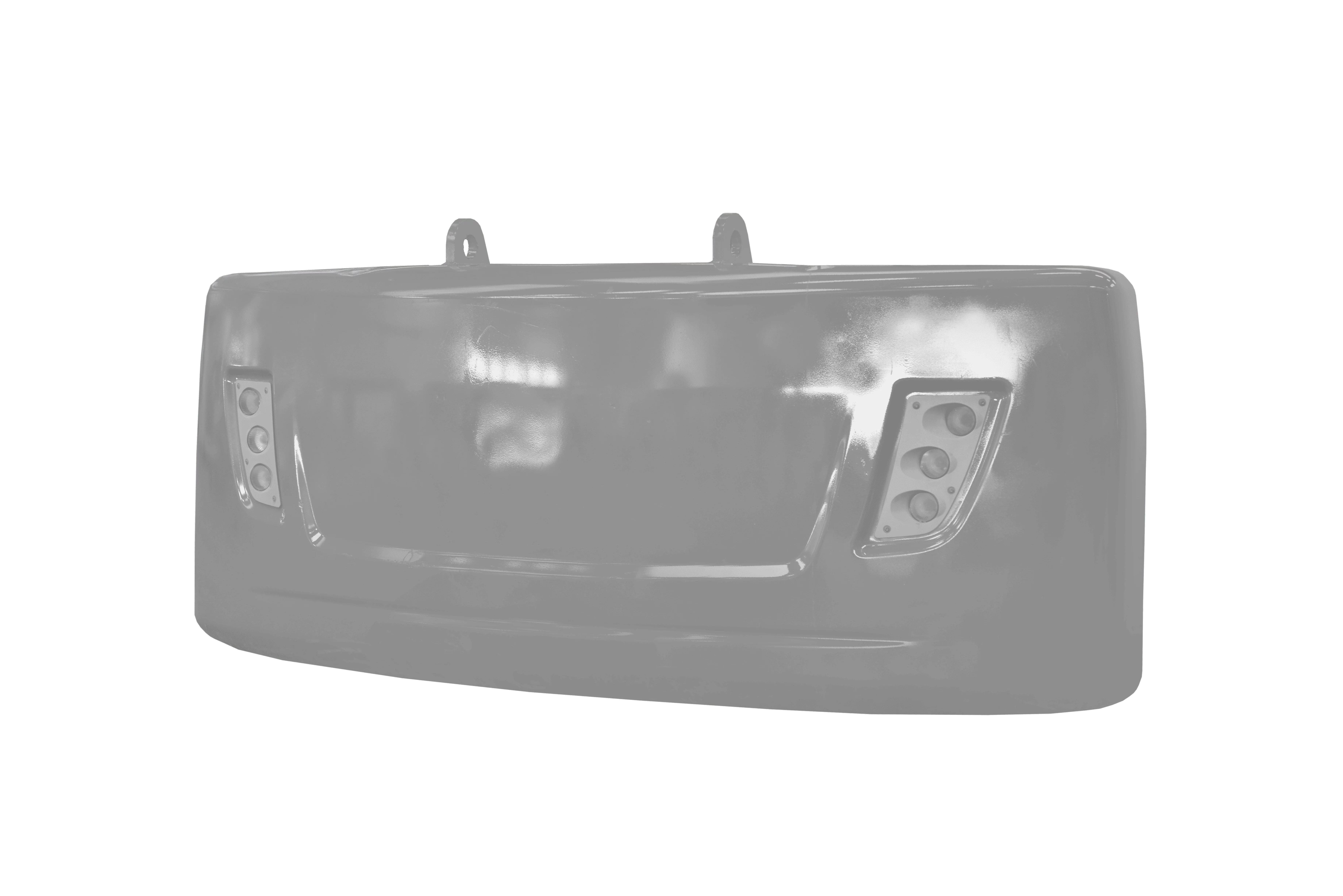
The chassis is the central structural component of a mini excavator: it supports the tracks, distributes the machine's weight, and determines its stability on uneven terrain. The counterweight balances the load during excavation operations. Finding these used parts in good condition allows for a quick and cost-effective return to service. Discover our selection of chassis and counterweights available.
![Counterweight for CATERPILLAR 980M]()
Counterweight for CATERPILLAR 980M
As-is price :9 000,00 €Request a quote![Counterweight for CATERPILLAR 323]()
Counterweight for CATERPILLAR 323
As-is price :17 000,00 €Request a quote![Counterweight for VOLVO EC210BLC]()
Counterweight for VOLVO EC210BLC
Request a quote![Counterweight for CATERPILLAR 966MXE]()
Counterweight for CATERPILLAR 966MXE
As-is price :3 000,00 €Request a quote![Counterweight for CATERPILLAR 966MXE]()
Counterweight for CATERPILLAR 966MXE
As-is price :3 000,00 €Request a quote![Counterweight for VOLVO L180G]()
Counterweight for VOLVO L180G
As-is price :5 000,00 €Request a quote![Counterweight for CATERPILLAR 966H]()
Counterweight for CATERPILLAR 966H
As-is price :8 000,00 €Request a quote![Counterweight for LIEBHERR L538]()
Counterweight for LIEBHERR L538
As-is price :1 400,00 €Request a quote![Counterweight for LIEBHERR L538]()
Counterweight for LIEBHERR L538
As-is price :1 400,00 €Request a quote![Undercarriage frame for CATERPILLAR D6NLGP]()
Undercarriage frame for CATERPILLAR D6NLGP
As-is price :4 500,00 €Request a quote![Undercarriage frame for CATERPILLAR D6NLGP]()
Undercarriage frame for CATERPILLAR D6NLGP
As-is price :4 500,00 €Request a quote![Counterweight for KUBOTA KX080-4]()
Counterweight for KUBOTA KX080-4
As-is price :1 500,00 €Request a quote![Counterweight for CATERPILLAR 325FLCR]()
Counterweight for CATERPILLAR 325FLCR
As-is price :2 000,00 €Request a quote![Counterweight for VOLVO EC140DL]()
Counterweight for VOLVO EC140DL
As-is price :1 500,00 €Request a quote![Counterweight for CATERPILLAR 924H]()
Counterweight for CATERPILLAR 924H
As-is price :1 000,00 €Request a quote![High frame of machine for KOBELCO ED160-BR5]()
High frame of machine for KOBELCO ED160-BR5
Request a quote![High frame of machine for KOBELCO ED160-BR5]()
High frame of machine for KOBELCO ED160-BR5
Request a quote![Counterweight for KOBELCO ED160-BR5]()
Counterweight for KOBELCO ED160-BR5
Request a quote![High frame of machine for CATERPILLAR 336E]()
High frame of machine for CATERPILLAR 336E
Request a quote![High frame of machine for CATERPILLAR 336E]()
High frame of machine for CATERPILLAR 336E
Request a quote![High frame of machine for LIEBHERR A912 COMPACT]()
High frame of machine for LIEBHERR A912 COMPACT
Request a quote![High frame of machine for LIEBHERR A912 COMPACT]()
High frame of machine for LIEBHERR A912 COMPACT
Request a quote![Counterweight for LIEBHERR A912 COMPACT]()
Counterweight for LIEBHERR A912 COMPACT
Request a quote![Counterweight for VOLVO EW140D]()
Counterweight for VOLVO EW140D
Request a quote![Counterweight for VOLVO L90G]()
Counterweight for VOLVO L90G
Request a quote![Counterweight for VOLVO L90G]()
Counterweight for VOLVO L90G
Request a quote![Counterweight for VOLVO L90G]()
Counterweight for VOLVO L90G
Request a quote![Counterweight for KOMATSU PC210LC-11]()
Counterweight for KOMATSU PC210LC-11
Request a quote![High frame of machine for KOMATSU PC210LC-11]()
High frame of machine for KOMATSU PC210LC-11
Request a quote![High frame of machine for KOMATSU PC210LC-11]()
High frame of machine for KOMATSU PC210LC-11
Request a quote![High frame of machine for VOLVO EW140D]()
High frame of machine for VOLVO EW140D
Request a quote![High frame of machine for VOLVO EW140D]()
High frame of machine for VOLVO EW140D
Request a quote![High frame of machine for O&K F106.6A]()
High frame of machine for O&K F106.6A
Request a quote![High frame of machine for O&K F106.6A]()
High frame of machine for O&K F106.6A
Request a quote![High frame of machine for VOLVO L90G]()
High frame of machine for VOLVO L90G
Request a quote![High frame of machine for VOLVO L90G]()
High frame of machine for VOLVO L90G
Request a quote
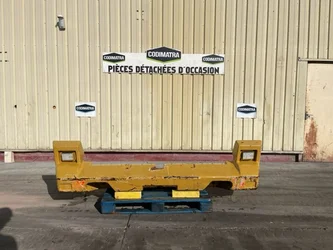
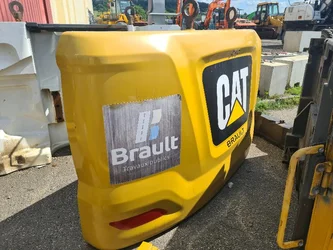
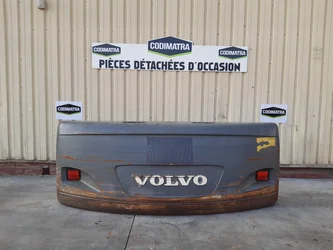

Used Chassis & Counterweights for Mini Excavators – Codimatra
Depending on the intended use, the type of chassis significantly impacts the machine's capabilities. A variable-width chassis, for instance, allows the adjustment of the track width to operate in tight spaces while providing a wider stance on open terrain — a direct advantage for landscaping or urban construction sites.
Reduced rear offset chassis minimize the risk of collisions during rotation, which is critical in confined sites. Conversely, an extended chassis enhances stability during tasks demanding great digging depth or high lifting power.
Regarding counterweights, sizing must precisely match the original model: an undersized counterweight weakens the entire hydraulic system and compromises the safety of the loaded bucket.
What are the main components of a mini excavator?
- The rotating turret, mounted on a slewing ring, allows a full 360° rotation of the upper structure.
- Diesel engines power the hydraulic pump, which delivers power to the cylinders and travel motors.
- The boom, composed of a stick and dipper arm, determines the reach and working depth achievable.
- The bucket, attached at the boom's end via a quick coupler, can be swapped for other tools such as a hydraulic auger.
- Rubber tracks, guided by upper and lower rollers, provide traction on various terrains.
- The operator cabin houses the joysticks, travel controls, and load indicators to operate the machine.
- All these components form an interdependent system where the failure of one part directly impacts overall performance.
The undercarriage and running gear
The undercarriage is the fixed base supporting the entire machine. Manufactured from high-strength steel — often machined and shot-blasted S235 steel — it endures significant mechanical stress during every work cycle.
The running gear consists of several distinct elements: the drive sprockets, the lower rollers that support the machine's weight on the track, the upper rollers that maintain chain tension, and the travel motors located at each end of the chassis.
These travel motors provide the torque needed to move over soft ground, slopes, or rocky terrain. On extendable chassis models, the width between the two track assemblies can vary hydraulically — for example, the Phoenix 400 adjusts from 84 cm to 114 cm in track width.
Regular maintenance of rollers is essential: moisture and abrasive particles accelerate wear and may cause serial failures on the chassis.
The counterweight: role and manufacturing
- Cast from cast iron or solid steel, the counterweight’s high density allows for a compact size mounted at the rear of the turret.
- Its mass varies by model: from around 80 kg on an 800 kg micro excavator up to over 400 kg on a 6-ton machine.
- Bolted to the turret, it compensates for the cantilever effect caused by the boom loaded in extended position.
- An oversized counterweight also degrades performance: it overloads the slewing ring and accelerates its premature wear.
- On models with reduced rear offset, the counterweight is shaped to remain within the track profile during rotation.
- When purchasing a used counterweight, verifying the manufacturer’s reference ensures exact compatibility with existing mounting points.
- The condition of the fixing threads must be checked before installation, as excessive play generates destructive vibrations to the turret.
Used chassis: our available parts
Our stock of used chassis covers the leading market brands: Kubota, Yanmar, Volvo, Hitachi, and JCB, with references regularly updated. Each part is inspected before sale — checking beam condition, flatness of support surfaces, and absence of weld cracks.
Looking for an extendable chassis for a 1.5-ton mini excavator or a fixed chassis for a 400 kg machine? Both configurations are available. Compatibility is verified by manufacturer serial number, eliminating mounting errors.
Shipping times depend on stock availability: expect 48 to 72 hours for common references. For rarer models, our team can source parts upon request.
1.5t Diesel Extendable and 400 kg Chassis
- The extendable chassis for a 1.5-ton diesel mini excavator suits urban earthmoving projects requiring stability and maneuverability.
- On a 1.5-ton machine, chassis extension improves lifting capacity by reducing lateral tipping risk.
- The 400 kg chassis stands out for its structural lightness, designed for very narrow accesses such as gate passages.
- A machined steel 400 kg chassis has reduced wall thickness: check for deformation after any impact as a priority.
- The ground pressure of a 400 kg chassis remains very low, preserving lawns and sensitive surfaces during landscaping work.
- For a used 1.5-ton chassis, inspect the condition of extendable pivot points to ensure functional track adjustment.
- A 1.5-ton diesel extendable chassis generally supports buckets up to 30 cm wide, versus 20 cm for 400 kg models.
Kubota, Volvo EC27 Compatibility and Spider Chassis
The Kubota KX016 and KX018 share identical mounting points on certain versions, facilitating replacement chassis sourcing. The Volvo EC27 features a specific beam geometry different from Japanese standards: the manufacturer’s reference is essential to avoid any dimensional mismatch during assembly.
Spider chassis are a special case. Their telescopic leg frames replace classic track units, with entirely different hydraulic anchoring points compared to conventional mini excavators.
For these atypical machines, compatibility cannot be assumed from dimensions or machine weight alone. Our team handles these inquiries on a case-by-case basis, cross-referencing serial numbers with our manufacturer database to confirm part suitability.
Width, serial number, and trailer transport
- The overall width of the chassis determines road transport classification: over 2.55 m requires special transport permits.
- A chassis retracted to 84 cm track width fits on a standard equipment trailer without special administrative procedures.
- The serial number, engraved on the beam, is required by carriers to issue transport documents and customs paperwork.
- Measuring the effective chassis width in the retracted position before loading onto the trailer avoids surprises at bridges.
- The total weight of the used chassis must be declared precisely: a 3.5-ton trailer cannot carry a 1.5-ton chassis with accessories.
- Chassis tie-down points on trailers correspond to the lateral beams, never the hydraulic extension cylinders.
- When transporting a disassembled spider chassis, each telescopic leg must be individually strapped to prevent movement en route.
Used counterweights by brand and model
Mini excavator counterweights vary greatly between manufacturers in shape and weight. On a Kubota KX016, the counterweight weighs about 65 kg, while a Hitachi ZX17 has a more compact block exceeding 80 kg — visually similar parts but completely incompatible.
Yanmar and Volvo models with rounded profiles and reduced rear offset require strict geometry: any substitution with a similar reference risks causing a measurable imbalance from the first lift.
JCB Micro and Micro Plus models feature a very low-profile counterweight designed to stay within the track profile. Replacing it with a generic tall part alters the center of gravity and disrupts turret rotation.
For used counterweights, inspect the contact surfaces with the turret first: any deep corrosion or deformation compromises block seating and causes harmful play in operation.
Buying a used mini excavator chassis primarily reduces repair costs significantly compared to purchasing new parts. It is an appropriate solution when the original chassis is damaged or worn beyond safe operation. Used parts from recognized brands such as Kubota, Yanmar, or Volvo offer good value for money, provided their condition is verified before purchase.
To ensure compatibility, first identify the exact model reference of the mini excavator: brand, model, and serial number. This information allows cross-referencing technical data with the offered chassis, including width, track centers, and mounting points. When in doubt, contacting the manufacturer or a specialist in spare parts remains the most reliable approach.
For a 1.5-ton mini excavator, an extendable chassis typically has a retracted width of about 75 to 85 cm, extendable to 110 or 115 cm when deployed. These dimensions vary by manufacturer and model. The retracted position facilitates access through narrow spaces, while the extended position improves machine stability on site.
No, the Kubota KX016 and Volvo EC27 chassis are not interchangeable. These machines come from different manufacturers with distinct undercarriage architectures, track centers, and mounting points unique to each brand. Even with similar sizes, mounting dimensions differ enough to make exchanges impossible without specific technical adaptations.
To select a suitable used counterweight, first verify its mass exactly matches the manufacturer's recommendations for your machine model. A counterweight that's too light compromises stability during lifting, while one that's too heavy overloads the rear of the machine. Also check mounting points and ensure no cracks or visible deformations on the part before purchase.
Before installation, thoroughly clean contact surfaces to remove rust and debris. Then check the condition of lower and upper rollers, sprockets, and guide rails integrated into the chassis. Measure the track centers to confirm match with the recipient machine. Also inspect for structural deformation on beams and verify hydraulic connections compatibility before completing final assembly.
To transport a mini excavator chassis on a trailer, choose a flatbed trailer with a load capacity exceeding the part's weight, allowing a safety margin. Position the chassis flat and centered on the bed to evenly distribute the load. Securing with certified straps is essential, using at least four fastening points. Also ensure transport dimensions comply with legal on-road limits.