
Used Clutch
21 produits disponibles
Slipping clutch, unresponsive steering, harsh gear shifting on your construction equipment? As a specialist in used spare parts for public works machinery for over 40 years, Codimatra systematically dismantles excavators, loaders, bulldozers, and dump trucks to recover transmission components, including clutches.
![Clutch for CATERPILLAR D6RXL]()
Clutch for CATERPILLAR D6RXL
Request a quote![Clutch for CATERPILLAR D6RXL]()
Clutch for CATERPILLAR D6RXL
Request a quote![Clutch for CATERPILLAR D6NLGP]()
Clutch for CATERPILLAR D6NLGP
Request a quote![Clutch for CATERPILLAR D6NLGP]()
Clutch for CATERPILLAR D6NLGP
Request a quote![Clutch for CATERPILLAR D6TXW]()
Clutch for CATERPILLAR D6TXW
Request a quote![Clutch for CATERPILLAR D6TXW]()
Clutch for CATERPILLAR D6TXW
Request a quote![Clutch for CATERPILLAR 963C]()
Clutch for CATERPILLAR 963C
Request a quote![Clutch for CATERPILLAR 953D]()
Clutch for CATERPILLAR 953D
Request a quote![Clutch for CATERPILLAR 953D]()
Clutch for CATERPILLAR 953D
Request a quote![Clutch for CATERPILLAR D6H]()
Clutch for CATERPILLAR D6H
Request a quote![Clutch for CATERPILLAR D6H]()
Clutch for CATERPILLAR D6H
Request a quote![Clutch for CATERPILLAR D5H]()
Clutch for CATERPILLAR D5H
Request a quote![Clutch for CATERPILLAR D5H]()
Clutch for CATERPILLAR D5H
Request a quote![Clutch for CATERPILLAR D6MXL]()
Clutch for CATERPILLAR D6MXL
Request a quote![Clutch for CATERPILLAR D6MXL]()
Clutch for CATERPILLAR D6MXL
Request a quote![Clutch for CATERPILLAR D6M]()
Clutch for CATERPILLAR D6M
Request a quote![Clutch for CATERPILLAR D6M]()
Clutch for CATERPILLAR D6M
Request a quote![Clutch for CATERPILLAR D6M]()
Clutch for CATERPILLAR D6M
Request a quote![Clutch for CATERPILLAR D6M]()
Clutch for CATERPILLAR D6M
Request a quote![Clutch for CATERPILLAR D6M]()
Clutch for CATERPILLAR D6M
Request a quote![Clutch for CATERPILLAR D6M]()
Clutch for CATERPILLAR D6M
Request a quote
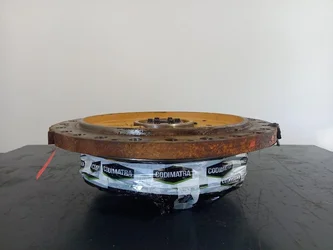
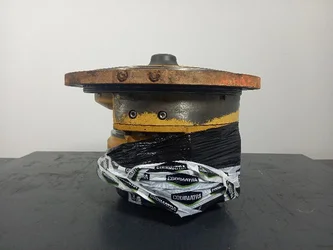

What is the purpose of the clutch on construction machinery?
On tracked vehicles, the steering clutch plays a crucial role: it allows the engine power to be transmitted or cut off to one track independently of the other, enabling turns and precise maneuvers. Without this clutch, the vehicle could only move straight ahead or with much less control.
On automated gearboxes like Powershift, found on many dump trucks and loaders, the clutch allows gear shifts under load without interrupting the engine speed. This design maintains optimal traction regardless of the load or terrain type. It differs significantly from a standard car clutch, where the engine transfers power to the gearbox using a simple clutch pedal and gear lever.
What is the role of a steering clutch on a tracked vehicle?
It acts as a power distributor between the two tracks. By disengaging one, the operator slows or stops its rotation while the other continues forward, causing the vehicle to pivot. This mechanism is vital for maneuverability on-site, especially in confined spaces. Its efficiency is directly linked to the condition of the steering hydraulic pump that supplies pressure.
Buying a used clutch for construction equipment: kit or individual part?
In the automotive market, "clutch kits" are common: a set including the disc, mechanism, and sometimes the bearing, sold ready to install on a car or Peugeot Boxer van. For construction machinery, the approach differs: the steering or transmission clutch is usually replaced part by part, not as a standardized kit.
Our catalogue offers used clutches sold individually: clutch disc, pressure plate, release bearing, housing—each being a checked and refurbished used part before resale. This method, specific to construction machinery, allows precise replacement of the faulty component rather than the entire assembly, generally resulting in lower costs and shipping fees.
Steering clutch vs transmission clutch: what's the difference?
These two components serve different functions, even though they share a similar mechanical principle.
The steering clutch is located on the tracks to steer the vehicle. It is typically found on tracked excavators and bulldozers, where it is paired with the steering hydraulic pump, which pressurizes the oil needed for operation and directly improves its efficiency.
The transmission clutch is part of the gearbox, enabling gear changes. On articulated dump trucks equipped with Allison, Caterpillar, or ZF gearboxes, it is referred to as the forward and reverse clutch, generally connected by cable and controlled by a dedicated hydraulic pump for gear shifting. The clutch release bearing is among the transmission parts available in our catalogue, alongside wheel shafts, axle housings, and turntables.
Testing a clutch on construction machinery: signs of wear to watch for
Several symptoms should raise concern before more costly failure occurs:
- Loss of traction on one track or difficulty turning properly
- Clutch slipping, feeling like engine power is not fully transmitted
- Harsh or difficult gear changes on automated gearboxes
- Unusual noise near the clutch housing
- Hydraulic system overheating indicating excessive strain on the hydraulic pump
Unlike a car, where clutch testing is often as simple as trying the gear lever, diagnosing issues on construction machinery usually requires hydraulic pressure checks and a visual inspection of the clutch disc and pressure plate.
How to tell if a construction equipment clutch is near end of life?
The clearest sign is a gradual loss of responsiveness: the equipment reacts less effectively to steering or gear changes, even if the engine runs normally otherwise. Inspecting the clutch disc and release bearing condition typically confirms the diagnosis before a more serious breakdown occurs. If the problem relates to pressure loss or oil leak, priority should be given to checking the steering hydraulic pump.
Our expertise in transmission and clutch parts for all brands
Our dismantling activity covers transmission and hydraulic parts for the main construction equipment manufacturers: Caterpillar, Liebherr, Volvo, Case, Komatsu, JCB, and Mecalac. Every recovered clutch undergoes complete dismantling and systematic replacement of wear parts such as seals, bearings, and discs before reconditioning.
To verify compatibility with your machine, provide us with the brand, model, manufacturer’s reference, and serial number. Our technicians analyze this data alongside manufacturer documentation to confirm the exact match of the used part. If the clutch is not the only component involved, also explore our range of used transmission parts: wheel shafts, axle housings, turntables, axles, gear reducers, or our used hydraulic pumps if the linked hydraulic control shows signs of weakness.
The price of a construction equipment clutch varies significantly depending on the type (steering or transmission), the machine brand, and the scope of the intervention. A refurbished used part offers a substantial cost-effective alternative to new parts while maintaining performance close to original specifications, thanks to systematic replacement of wear components. Delivery charges are calculated based on the part’s weight and destination.
Its lifespan chiefly depends on the intensity of use and working conditions. A steering clutch heavily used on rough terrain will wear faster than a transmission clutch on a more moderately used machine. Regular inspections, combined with checks of the steering hydraulic pump, allow for timely replacement before failure occurs.
Yes, provided it has been inspected and refurbished according to a strict protocol. At Codimatra, each used transmission part follows a process of dismantling, replacing wear items, and thorough testing before resale, ensuring reliability comparable to new parts at a significantly lower cost. This reuse approach also reduces environmental impact compared to new production.