Used bulldozer ripper
10 produits disponibles
The ripper, also known as a scarifier, is an attachment fixed to the rear of a bulldozer designed to break up hard, compacted, or rocky soils. Thanks to its alloy steel teeth and powerful hydraulic cylinders, it fractures the ground deeply before excavation. Available in single-tooth or multi-tooth versions, it adapts to every type of work. Here you will find a selection of used bulldozer rippers suited to your machine.
![Ripper for CATERPILLAR 963K]()
Ripper for CATERPILLAR 963K
Request a quote![Ripper for O&K F106.6A]()
Ripper for O&K F106.6A
As-is price :2 500,00 €Request a quote![Ripper for CATERPILLAR 963C]()
Ripper for CATERPILLAR 963C
As-is price :5 000,00 €Request a quote![Ripper for LIEBHERR LR622]()
Ripper for LIEBHERR LR622
Request a quote![Ripper for LIEBHERR LR622]()
Ripper for LIEBHERR LR622
Request a quote![Ripper for LIEBHERR LR611]()
Ripper for LIEBHERR LR611
Request a quote![Ripper for CATERPILLAR 953C]()
Ripper for CATERPILLAR 953C
Request a quote![Ripper for CATERPILLAR 953C]()
Ripper for CATERPILLAR 953C
Request a quote![Ripper for CATERPILLAR 963D]()
Ripper for CATERPILLAR 963D
Request a quote![Ripper for LIEBHERR LR632]()
Ripper for LIEBHERR LR632
Request a quote
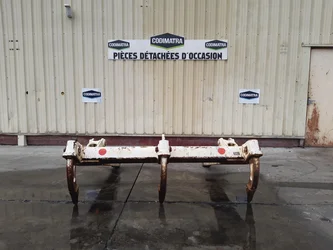

Used bulldozer ripper: teeth, types, and compatibility
Compatibility between a ripper and its carrier machine is a crucial factor when purchasing second-hand equipment. Each manufacturer — Caterpillar, Komatsu, Liebherr, or Case — has its own mounting interfaces, making it essential to verify the exact bulldozer model before any acquisition.
The teeth, which are the primary wear parts, can be replaced independently from the frame. They come in several profiles depending on soil type: pointed tips to penetrate hard rocks, or wider teeth for compacted soils.
A used ripper may feature a frame in good condition but worn teeth — a common situation on the market. Checking the condition of the frame, arms, and pivot points remains the top priority when assessing the real value of a piece of equipment.
What is the purpose of a bulldozer ripper?
- The ripper prepares frozen or very compact ground so a blade can push it effectively.
- In mining sites, it breaks up in-place rock to ease extraction and loading.
- Roadwork crews use it to break up old asphalt surfaces without explosives.
- Thanks to hydraulic cylinders, penetration depth can be adjusted depending on ground hardness.
- In land clearing, it uproots stumps and deep roots that the blade alone cannot handle.
- The ripper reduces premature blade wear by tackling hard zones before the machine passes.
Which ripper to choose for your machine and tasks?
Choosing a ripper primarily depends on two key criteria: the power of the carrier machine and the nature of the ground to be treated. A small bulldozer cannot efficiently pull a single-tooth ripper designed for heavy quarry work — proper sizing between the machine and the tool directly impacts field performance.
The tooth configuration then determines the application type. A single-tooth ripper concentrates all hydraulic power on one penetration point, making it highly effective on hard rock or deep frozen ground.
Conversely, a three- or five-tooth setup distributes effort over a wider area, ideal for preparing and loosening soil before excavation. For roadbed preparation or intensive land clearing, this format multiplies the treated surface with each pass.
Single-tooth ripper for hard soil and heavy-duty tasks
- For quarry or mining operations, a single-tooth ripper typically pairs with high-powered bulldozers like the Caterpillar D9.
- Its single alloy steel tooth penetrates several decimeters depending on the rock substrate's hardness.
- Hydraulic cylinders precisely adjust the tooth's attack angle to optimize penetration without causing track slip.
- On heavy demolition sites for thick concrete slabs, the single tooth fractures the slab into manageable blocks without explosives.
- Tooth tips are replaceable separately, significantly reducing maintenance costs between intensive jobs.
- Wear accelerates on abrasive rocks like granite, requiring regular tip inspections during work.
- On deep frozen grounds, the single-tooth ripper works in successive passes slightly offset each time to uniformly fragment the soil.
Multi-tooth ripper for loosening and soil preparation
With three or five teeth spread across the full frame width, the multi-tooth ripper treats a much wider strip with each pass. On projects like logistic platform setup or road excavation, this gain in coverage directly translates to a significant reduction in the number of passes required.
Its specialty is loosening clay or compacted silty soils, where deep penetration isn't necessary but broad coverage is desired. The five-tooth configuration is especially suited to mid-sized bulldozers, such as the Caterpillar D6 or Komatsu D65, which lack the raw power of a D9 but offer excellent versatility on preparation sites.
Hydraulic effort is distributed among the teeth, reducing stress on each anchor point and limiting frame wear over time.
A ripper, also called a scarifier, is an attachment fixed to the rear of a bulldozer. It consists of a sturdy frame and one or more alloy steel teeth designed to penetrate and break up hard, compacted, or rocky soils. Hydraulic cylinders allow adjusting the working depth depending on ground resistance. It is the ideal accessory when the blade alone is insufficient.
The single-tooth ripper concentrates all the machine's power on one point, making it ideal for heavy-duty work on solid rock or very resistant ground, with maximal depth penetration. The multi-tooth ripper distributes effort over two to five teeth to cover a larger area in one pass, better suited for medium-hard soils and large-scale soil preparation.
To inspect a used ripper, start by examining the wear on the tips: they should retain enough profile to penetrate the ground effectively. Then check the frame condition for cracks, deformations, or signs of repair welding. Test the cylinders for leaks by operating them. Finally, ensure that pins and pivot points do not exhibit excessive play.
Major industry brands offer rippers designed for their own models: Caterpillar and Komatsu are the most widespread references, providing a large range of genuine and aftermarket rippers. John Deere and Case are also well covered. Parts manufacturers like Bedrock or MTG produce rippers compatible with standard Caterpillar and Komatsu arms, facilitating replacement on the used market.
Ripper teeth should be replaced as soon as they show visible dulling or the machine struggles to penetrate soils it previously worked through easily. An unusually high fuel consumption is also a warning sign. On the bright side, steel alloy tips are replaceable parts, designed to be changed independently of the frame, which keeps maintenance costs down.
The price of a used bulldozer ripper varies depending on machine size, number of teeth, and brand. For a small single-tooth model suited to a light bulldozer, expect a few hundred euros. A multi-tooth ripper for a high-powered machine can exceed several thousand euros. Overall condition and hours of use strongly influence the final price.