Used Hydraulic Motor for Construction Equipment
1081 produits disponibles
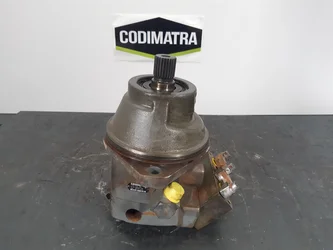
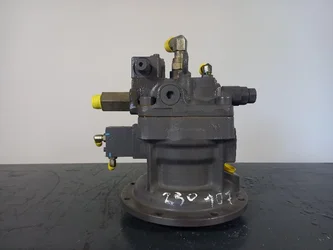
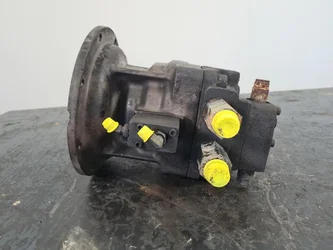
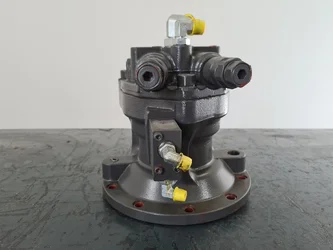
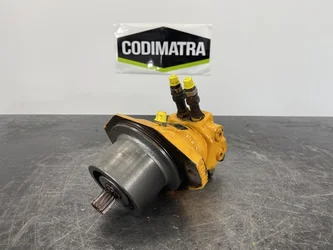
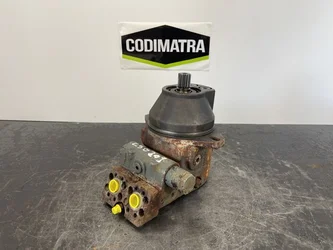
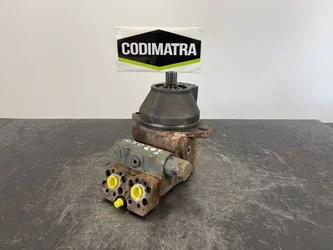
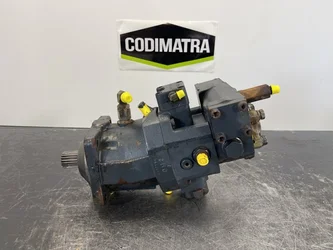
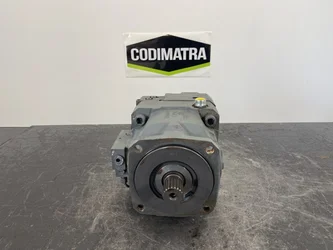
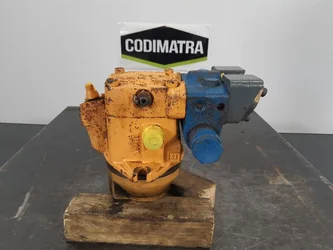
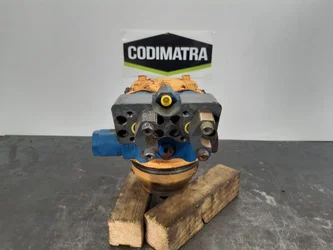
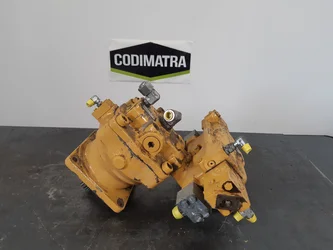
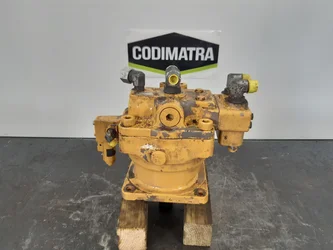
The hydraulic motor is a vital component for the mobility and operational power of heavy machinery. Unlike a conventional combustion engine, it converts hydraulic energy (pressure and flow) supplied by a pump into rotational mechanical energy. At Codimatra, we offer an extensive range of used hydraulic motors, thoroughly tested to ensure reliable performance on your job sites. Whether for an excavator, loader, or bulldozer, selecting the right motor is crucial to maintain volumetric efficiency and productivity across your equipment fleet.
![Hydraulic travel motor for NEW HOLLAND MH3.6]()
Hydraulic travel motor for NEW HOLLAND MH3.6
As-is price :4 500,00 €Request a quote![Hydraulic travel motor for LIEBHERR L576]()
Hydraulic travel motor for LIEBHERR L576
As-is price :4 500,00 €Request a quote![Hydraulic travel motor for LIEBHERR L576]()
Hydraulic travel motor for LIEBHERR L576
As-is price :4 500,00 €Request a quote![Hydraulic Translation motor for CATERPILLAR 963C]()
Hydraulic Translation motor for CATERPILLAR 963C
As-is price :7 000,00 €Request a quote![Hydraulic Translation motor for CATERPILLAR 322C]()
Hydraulic Translation motor for CATERPILLAR 322C
As-is price :2 500,00 €Request a quote![Hydraulic Translation motor for CATERPILLAR 322C]()
Hydraulic Translation motor for CATERPILLAR 322C
As-is price :2 500,00 €Request a quote![Swing motor for KOMATSU PC228USLC-11]()
Swing motor for KOMATSU PC228USLC-11
As-is price :3 500,00 €Request a quote![Swing motor for LIEBHERR R974C]()
Swing motor for LIEBHERR R974C
As-is price :3 800,00 €Request a quote![Swing motor for VOLVO ECR235DL]()
Swing motor for VOLVO ECR235DL
As-is price :3 500,00 €Request a quote![Swing motor for VOLVO ECR235DL]()
Swing motor for VOLVO ECR235DL
As-is price :2 000,00 €Request a quote![Swing motor for VOLVO ECR145EL]()
Swing motor for VOLVO ECR145EL
As-is price :2 600,00 €Request a quote![Swing motor for HITACHI ZX170-5]()
Swing motor for HITACHI ZX170-5
As-is price :4 500,00 €Request a quote![Swing motor for NEW HOLLAND MH3.6]()
Swing motor for NEW HOLLAND MH3.6
As-is price :2 000,00 €Request a quote![Swing motor for CATERPILLAR 314CLCR]()
Swing motor for CATERPILLAR 314CLCR
As-is price :3 000,00 €Request a quote![Swing motor for CATERPILLAR 322C]()
Swing motor for CATERPILLAR 322C
As-is price :2 500,00 €Request a quote![Moteur hydraulique translation for LIEBHERR R924COMP]()
Moteur hydraulique translation for LIEBHERR R924COMP
As-is price :2 800,00 €Request a quote![Moteur hydraulique translation for LIEBHERR R924COMP]()
Moteur hydraulique translation for LIEBHERR R924COMP
As-is price :2 800,00 €Request a quote![Used Travel Hydraulic Motor - Codimatra for LIEBHERR R924COMP]()
Used Travel Hydraulic Motor - Codimatra for LIEBHERR R924COMP
As-is price :2 300,00 €Request a quote![Used Travel Hydraulic Motor - Codimatra for LIEBHERR R924COMP]()
Used Travel Hydraulic Motor - Codimatra for LIEBHERR R924COMP
As-is price :2 300,00 €Request a quote![Hydraulic Translation motor for LIEBHERR A316]()
Hydraulic Translation motor for LIEBHERR A316
As-is price :800,00 €Request a quote![Vibration motor for LIEBHERR R934C]()
Vibration motor for LIEBHERR R934C
As-is price :2 300,00 €Request a quote![Vibration motor for LIEBHERR R934C]()
Vibration motor for LIEBHERR R934C
As-is price :2 300,00 €Request a quote![Swing motor for KOMATSU PW160-7K]()
Swing motor for KOMATSU PW160-7K
As-is price :3 500,00 €Request a quote![Swing motor for LIEBHERR LH22M]()
Swing motor for LIEBHERR LH22M
As-is price :4 000,00 €Request a quote![Vibration motor for LIEBHERR R914HDSL]()
Vibration motor for LIEBHERR R914HDSL
As-is price :1 500,00 €Request a quote![Vibration motor for LIEBHERR R914HDSL]()
Vibration motor for LIEBHERR R914HDSL
As-is price :1 500,00 €Request a quote![Hydraulic Translation motor for CATERPILLAR 374DL]()
Hydraulic Translation motor for CATERPILLAR 374DL
As-is price :5 000,00 €Request a quote![Hydraulic Translation motor for CATERPILLAR 374DL]()
Hydraulic Translation motor for CATERPILLAR 374DL
As-is price :5 000,00 €Request a quote![Hydraulic advancement pump for CATERPILLAR CC4.0]()
Hydraulic advancement pump for CATERPILLAR CC4.0
As-is price :500,00 €Request a quote![Swing motor for CATERPILLAR CC4.0]()
Swing motor for CATERPILLAR CC4.0
As-is price :1 000,00 €Request a quote![Swing motor for CATERPILLAR CC4.0]()
Swing motor for CATERPILLAR CC4.0
As-is price :1 000,00 €Request a quote![Swing motor for CATERPILLAR CC4.0]()
Swing motor for CATERPILLAR CC4.0
As-is price :2 000,00 €Request a quote![Swing motor for CATERPILLAR M318D]()
Swing motor for CATERPILLAR M318D
As-is price :4 500,00 €Request a quote![Swing motor for MECALAC 12MXT]()
Swing motor for MECALAC 12MXT
As-is price :3 500,00 €Request a quote![Hydraulic Translation motor for CATERPILLAR 325FLCR]()
Hydraulic Translation motor for CATERPILLAR 325FLCR
As-is price :2 500,00 €Request a quote![Vibration motor for LIEBHERR R936NLC]()
Vibration motor for LIEBHERR R936NLC
As-is price :3 800,00 €Request a quote
What is the difference between a hydraulic pump and motor?
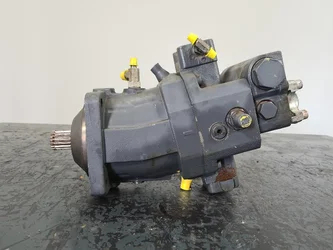
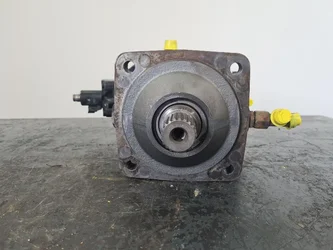
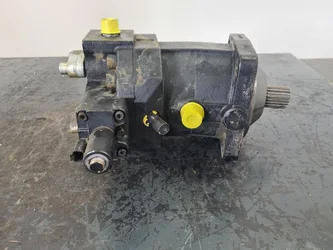
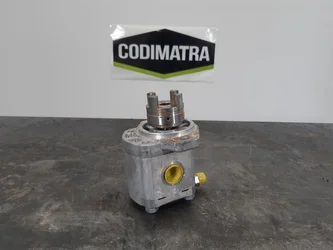
Although their internal design may appear similar, pumps and motors serve opposite functions within the hydraulic circuit. The hydraulic pump, driven by the machine's combustion engine, draws oil from the reservoir to generate a pressurized fluid. Conversely, the motor receives this fluid to produce movement. In essence, the pump converts mechanical energy into hydraulic energy in the form of fluid flow, while the motor reverses the process to drive the motor shaft.
Hydraulic motor operation and schematic
Operation relies on the flow of pressurized fluid entering the motor chambers. This pressure exerts force on internal moving components—such as pistons, gears, or vanes—resulting in the rotation of the motor shaft.
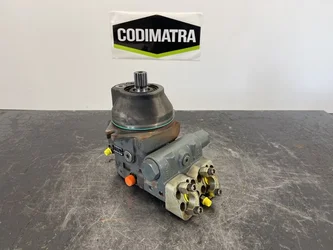
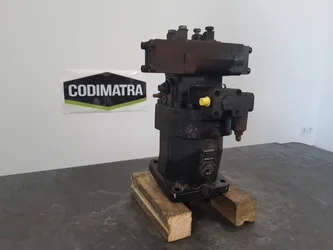
For heavy machinery, axial piston motors are primarily used. In this setup, pistons are aligned with the output shaft and push against a swashplate. When pressurized oil enters the cylinder block, it forces the pistons against the plate, generating the required torque. This type of hydraulic motor is favored for its durability and ability to withstand high operating pressures, often up to 350 or 450 bars in modern machines.
How to choose your hydraulic motor?
The choice of motor primarily depends on the application (translation, rotation, or equipment) and your machine's hydraulic specifications. It is essential to match the original displacement to avoid upsetting the circuit. A poor pairing can cause overheating or premature wear of the main pump.
Slow or fast motor: displacement and torque
There are three main categories based on rotational speed and required torque:
- Fast motor: Often axial piston or gear types, these provide high speed but lower torque. They are ideal for fans or certain hydrostatic transmissions.
- Semi-fast motor: Generally orbital motors, offering an ideal compromise for auxiliary equipment.
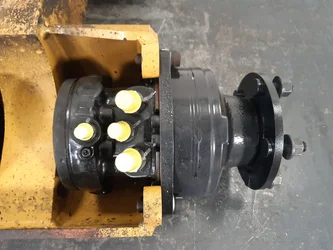
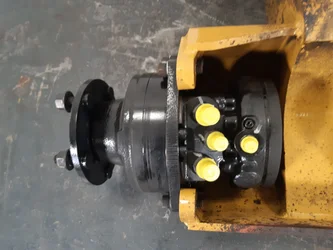
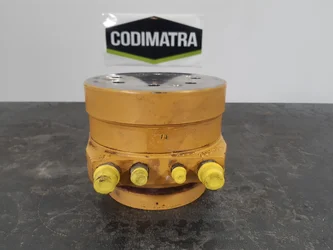
- Slow motor: Motors like the Used Poclain Hydraulic Motor are designed to deliver high torque at very low speeds. They are essential for moving heavy tracked machines where traction force is prioritized over speed.
Coupling, mini excavator, bucket: what application?
Usage determines the technology to prioritize:
- Used travel motor: To ensure the movement of tracks or wheels. On a mini excavator hydraulic motor, these are often integrated into compact gearmotors.
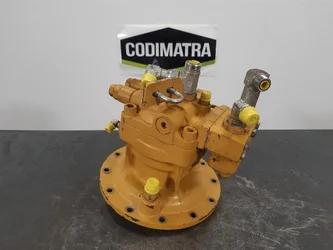
- Hydraulic rotation motor: Used for turret rotation on excavators from 1.5 to 50 tons. You can find a Used Swing Motor compatible with brands such as Caterpillar, Case, or Doosan.
- Hydraulic bucket motor: For tipping systems or screw conveyors on trucks and trailers. In these cases, a gear motor is often sufficient and cost-effective.
What is the power of a hydraulic motor?
The power of a hydraulic motor (expressed in kW or horsepower) is the product of the flow it receives and the pressure difference between inlet and outlet. "Input power" refers to hydraulic flow power, while "output power" is the actual mechanical force available at the shaft.
For construction equipment, power can range from a few kilowatts for small rotary units up to over 350 kW for mining excavator transmissions. A key factor is the volumetric efficiency, measuring the motor’s effectiveness considering internal leaks necessary for lubrication. When replacing, ensure the motor can handle the maximum power supplied by your hydraulic system.
How to test a hydraulic motor?
Before returning to service, a used motor must be inspected. The main test is conducted on a hydraulic test bench to measure:
- Drainage (internal leakage): Excessive drainage flow indicates worn distribution valves or pistons, leading to reduced efficiency.
- Starting torque: Verifying the motor develops sufficient force at initial pressure.
- External tightness: Checking shaft seals and joint surfaces.
At Codimatra, every used travel motor and used swing motor is rigorously inspected by our expert technicians to ensure a ready-to-use part capable of withstanding the demanding conditions of earthmoving and demolition.
Opting for a used hydraulic motor primarily reduces replacement costs significantly for construction machines or agricultural equipment. New parts can be expensive, whereas a reconditioned or tested model offers equivalent performance at a lower price. This is particularly suited for older machines whose new references are no longer available.
There are mainly three families of hydraulic motors: gear motors, which are fast and compact and suited for low torque applications; axial or radial piston motors, providing high power and precision; and orbital motors (known as slow or semi-fast), valued for their high starting torque at low speeds. Each technology addresses specific application requirements, whether for construction machines, agricultural machinery, or industrial equipment.
Sizing relies on three key parameters: the required torque for the application (in N.m), desired rotational speed (in rpm), and available pressure in the hydraulic circuit (in bar). Motor displacement is calculated from these data. The pump's flow rate directly influences the resulting rotational speed. Improper sizing leads to either underpower or premature component wear.
Before installing a used hydraulic motor, start by manually turning the shaft to check for blockage or stiffness. Ensure there is no excessive play on the output shaft and visually inspect seals for any signs of leakage. A pressure test on a test bench remains the most reliable method to validate flow rate, operating pressure, and rotation in both directions.
To confirm a hydraulic motor's compatibility with your machine, first note the original reference found on the motor’s nameplate to be replaced. Then compare flange dimensions, shaft diameter and profile, as well as hydraulic connection types. The machine manufacturer's technical documentation is the most reliable source to verify that the motor's characteristics match the hydraulic circuit requirements.
In the used market, hydraulic motors from Danfoss, Parker, Bosch Rexroth, Sauer-Danfoss, Poclain, and M+S Hydraulic are common. These manufacturers equip a large portion of construction machinery and agricultural equipment in use. Brands like Eaton or Linde are also present, especially in industrial machines. Availability varies depending on reference, with some easier to find than others based on machine age.
Lead time mainly depends on the model’s availability in stock. For common references, shipping within 24 to 48 hours is often possible. For rarer motors or those requiring reconditioning, expect one to two weeks. The complexity of the sought reference and the component’s condition before refurbishment are the two main factors extending processing times.