
Used Hydraulic Oil Cooler and Oil Radiator
162 produits disponibles
On excavators or loaders, the hydraulic oil heats up with every movement of the boom, bucket, or travel function. The oil radiator, also known as the hydraulic oil cooler, dissipates this heat before the oil returns to the reservoir. If it leaks or becomes clogged, the hydraulic fluid loses viscosity, movements slow down, and seals wear out faster. Codimatra dismantles original oil radiators from excavators, loaders, and backhoe loaders in its workshop in Castelculier, near Agen, inspects them, and sorts them by machine model. Our advisors help you find the right cooler, backed by over 40 years of experience in second-hand construction machinery parts.
![Oil cooler for CATERPILLAR 938M]()
Oil cooler for CATERPILLAR 938M
As-is price :2 200,00 €Request a quote![Oil cooler for CATERPILLAR 966MXE]()
Oil cooler for CATERPILLAR 966MXE
As-is price :750,00 €Request a quote![Oil cooler for CATERPILLAR 963K]()
Oil cooler for CATERPILLAR 963K
As-is price :2 500,00 €Request a quote![Oil cooler for KOMATSU PC228USLC-10]()
Oil cooler for KOMATSU PC228USLC-10
As-is price :1 500,00 €Request a quote![Oil cooler for CATERPILLAR D6NLGP]()
Oil cooler for CATERPILLAR D6NLGP
As-is price :1 200,00 €Request a quote![Oil cooler for LIEBHERR A924]()
Oil cooler for LIEBHERR A924
As-is price :2 000,00 €Request a quote![Oil cooler for MECALAC 12MXT]()
Oil cooler for MECALAC 12MXT
As-is price :800,00 €Request a quote![Oil cooler for CATERPILLAR 966K]()
Oil cooler for CATERPILLAR 966K
As-is price :2 000,00 €Request a quote![Oil cooler for VOLVO L110F]()
Oil cooler for VOLVO L110F
As-is price :1 200,00 €Request a quote![Oil cooler for MECALAC 714MW]()
Oil cooler for MECALAC 714MW
As-is price :800,00 €Request a quote![Oil cooler for CATERPILLAR 323F]()
Oil cooler for CATERPILLAR 323F
As-is price :800,00 €Request a quote![Oil cooler for CATERPILLAR 308E2CR]()
Oil cooler for CATERPILLAR 308E2CR
As-is price :900,00 €Request a quote![Oil cooler for CATERPILLAR 924H]()
Oil cooler for CATERPILLAR 924H
As-is price :400,00 €Request a quote![Oil cooler for CATERPILLAR 924H]()
Oil cooler for CATERPILLAR 924H
As-is price :800,00 €Request a quote![Oil cooler for LIEBHERR R924COMP]()
Oil cooler for LIEBHERR R924COMP
As-is price :1 200,00 €Request a quote![Oil cooler for VOLVO EWR130E]()
Oil cooler for VOLVO EWR130E
Request a quote![Oil cooler for CATERPILLAR 336E]()
Oil cooler for CATERPILLAR 336E
Request a quote![Oil cooler for VOLVO EC380ENL]()
Oil cooler for VOLVO EC380ENL
Request a quote![Oil cooler for MECALAC 11MWR]()
Oil cooler for MECALAC 11MWR
Request a quote![Oil cooler for LIEBHERR A316]()
Oil cooler for LIEBHERR A316
Request a quote![Oil cooler for CATERPILLAR 980M]()
Oil cooler for CATERPILLAR 980M
Request a quote![Oil cooler for CATERPILLAR 322CLN]()
Oil cooler for CATERPILLAR 322CLN
Request a quote![Oil cooler for VOLVO A25D]()
Oil cooler for VOLVO A25D
Request a quote![Oil cooler for JCB 3CX]()
Oil cooler for JCB 3CX
Request a quote![Oil cooler for KUBOTA U36-4]()
Oil cooler for KUBOTA U36-4
Request a quote![Oil cooler for CATERPILLAR D6NLGP]()
Oil cooler for CATERPILLAR D6NLGP
Request a quote![Oil cooler for CATERPILLAR 321DLCR]()
Oil cooler for CATERPILLAR 321DLCR
Request a quote![Oil cooler for LIEBHERR L538]()
Oil cooler for LIEBHERR L538
Request a quote![Oil cooler for VOLVO ECR88D]()
Oil cooler for VOLVO ECR88D
Request a quote![Oil cooler for CATERPILLAR 980K]()
Oil cooler for CATERPILLAR 980K
Request a quote![Oil cooler for NEW HOLLAND E135B]()
Oil cooler for NEW HOLLAND E135B
Request a quote![Oil cooler for VOLVO EC210BLC]()
Oil cooler for VOLVO EC210BLC
Request a quote![Oil cooler for JCB 436HT]()
Oil cooler for JCB 436HT
Request a quote![Oil cooler for KOMATSU PC228USLC-11]()
Oil cooler for KOMATSU PC228USLC-11
Request a quote![Oil cooler for LIEBHERR R974C]()
Oil cooler for LIEBHERR R974C
Request a quote![Oil cooler for LIEBHERR R974C]()
Oil cooler for LIEBHERR R974C
Request a quote
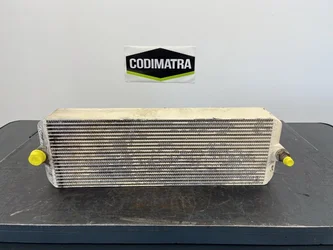
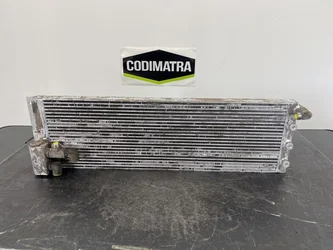
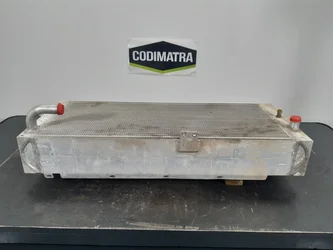
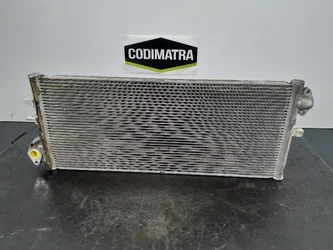
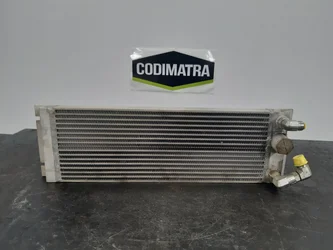
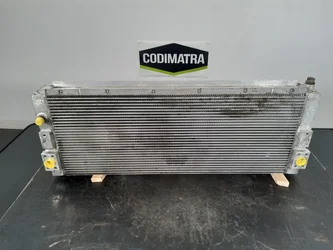
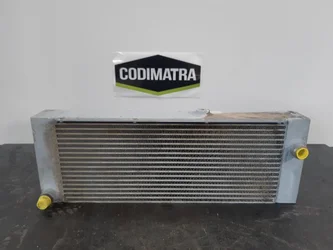
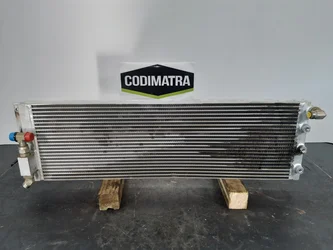
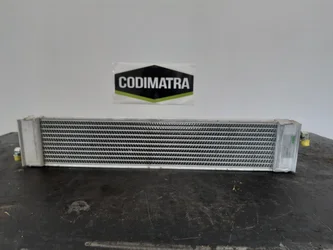
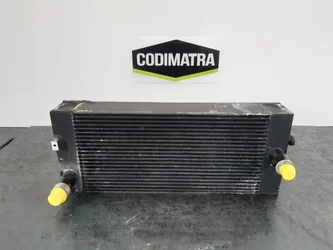
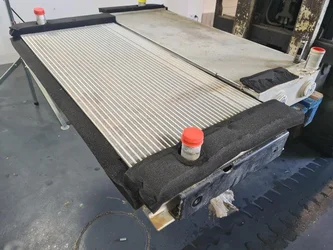
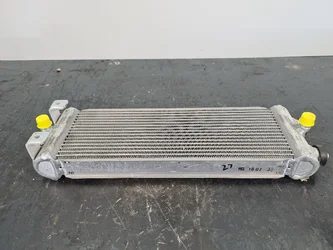
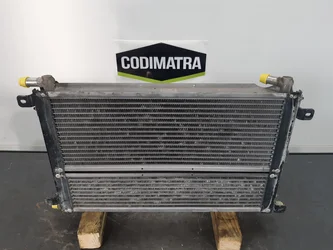
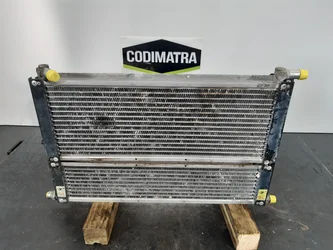
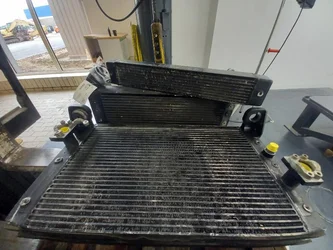
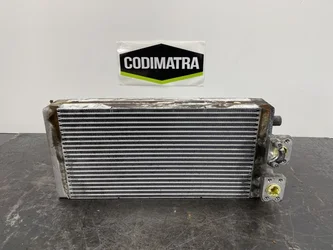
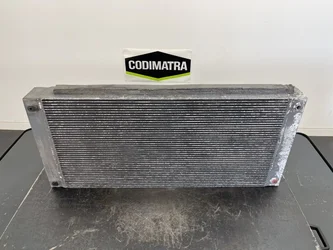
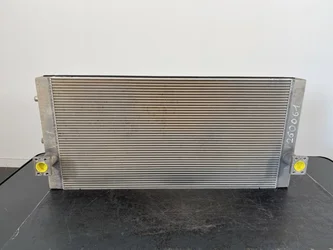
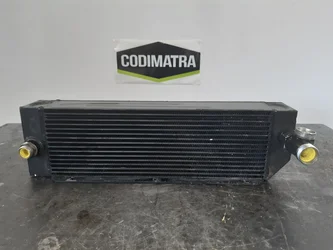
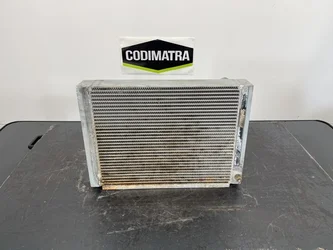
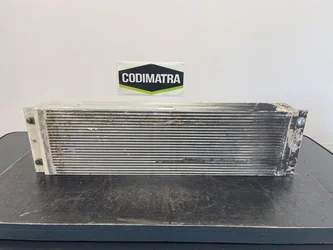
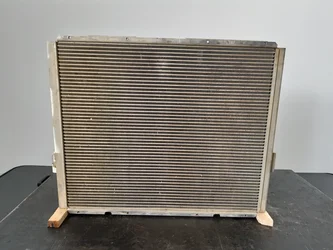
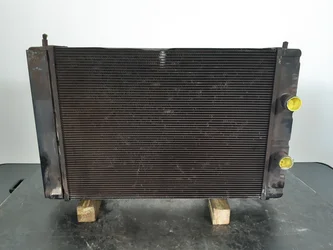
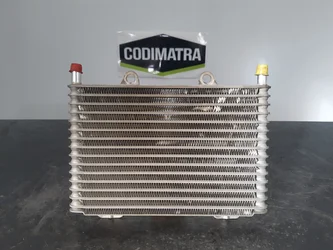
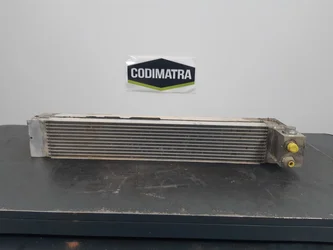
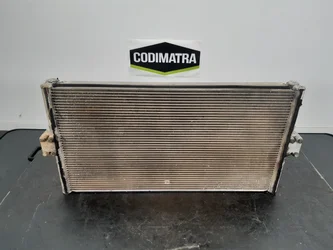
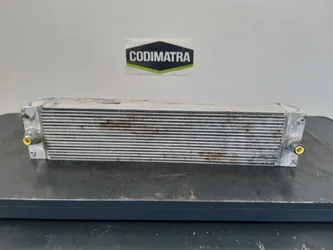
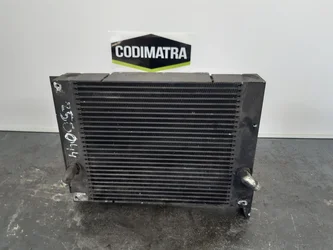
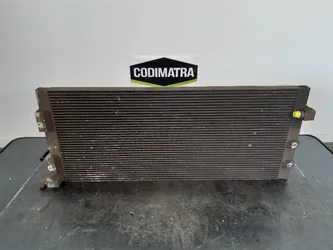
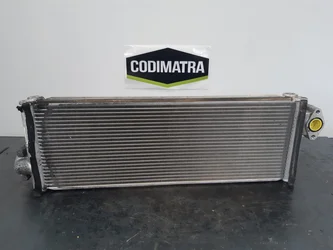
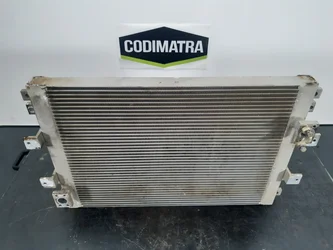
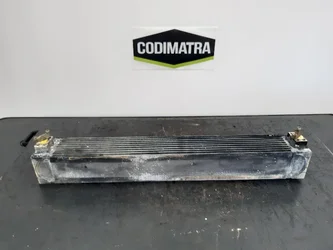
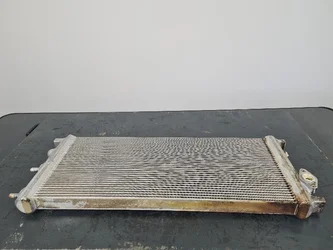
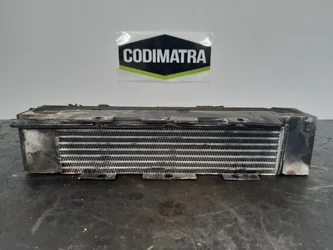
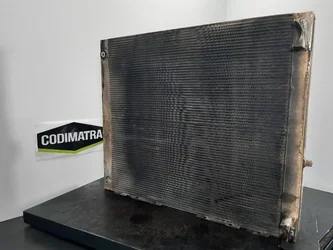
Types of coolers: hydraulic air/oil heat exchanger or water/oil
On most construction machinery, the hydraulic oil cooler is an air/oil heat exchanger: the oil circulates through a tube and fin bundle, often made of aluminum alloy, which is crossed by fan-driven air. Heat exchange occurs through the bundle’s walls. This aluminum radiator is usually mounted as a single unit with the water radiator and the charge air cooler, placed either in front or behind them depending on the brand. Some machines feature a combined bundle, while others have a separate oil radiator mounted on its own frame. The water/oil cooler, more compact, is still rare on mobile machinery. In hydraulic systems of machines, the heat exchanger is installed on the hydraulic return line, before the filter and reservoir. A bypass valve protects the bundle when the oil is too thick during cold starts or when a pressure spike occurs.
Fans for hydraulic radiators and hydraulic coolers – 12V and 24V
- Engine-driven fan: on older machines, it runs continuously with the thermal engine via a belt.
- Hydraulic fan: on recent excavators and loaders, a hydraulic motor drives it at a speed controlled by oil and water temperature. Some models reverse the rotation direction to clean the bundle.
- 12V or 24V electric fan: found on mini excavators and hydraulic coolers added later. Most excavators and loaders use 24V: verify the voltage before ordering.
- A fan not running at full speed causes the oil to heat up as much as a clogged bundle.
Identifying the right oil radiator before ordering
Two hydraulic oil coolers that look similar are not necessarily interchangeable, as hydraulic systems from the same brand can vary between series. Cooling capacity depends on the bundle size and must match your circuit’s oil flow. Measure the height, width, and thickness of the bundle, then note the position and diameter of inlet and outlet fittings, as well as their type: flange, threaded fitting, or collar-ended fitting. Also record the position of mounting brackets, since the radiator must align with other bundles in the cooling block. Finally, note the reference engraved or labeled on the frame and the machine’s serial number. With this information, our advisors can find the original oil radiator or a model with the same dimensions.
Oil radiators dismantled by brand and model
- Caterpillar: excavators 308E2CR, 323F, 336EL and 345CL, wheeled excavator M313D, loaders 963C, 966K and 972M
- Volvo: excavators ECR145EL, EC210BLC and EC380EL, loaders L110F and L120E
- Liebherr: excavators R956HD and R974C, crawler loader LR622
- Komatsu PC228USLC-11 and WA320PZ-6, JCB 436 and JS330XD, Mecalac 714MW and 12MTX
- Hitachi ZX250LCN-3, New Holland E135B, Case WX145 and other brands: inquiry available on request from dismantled machines
Hydraulic oil radiator for mini excavators
On a mini excavator, the hydraulic oil radiator is smaller but works within a tight hood, close to the engine, where dust accumulates quickly. It is often combined with the water radiator in one unit, sometimes with an electric fan. Models around 8 tonnes, like the Kubota KX080-4, are offered depending on stock. For mini excavators, fitting the position of connections and block size is as important as the bundle’s dimensions. For diagnosis and maintenance, read our article on the mini excavator radiator.
What are the symptoms of a faulty oil cooler?
- Oil traces on the bundle or at the bottom of the cooling block: cracked tube or leaking weld.
- Oil temperature warning light comes on during continuous operation while the fan runs normally.
- Movements slow and feel sluggish when the machine is hot, pump gets noisier, risk of cavitation.
- Fins flattened or corroded over a large area, cleaning no longer effective.
- Connection torn off or frame cracked after impact or vibrations.
Repairing or replacing the oil radiator
A bundle clogged simply with dust can be cleaned with compressed air or low-pressure water, against airflow, without bending the fins. A leak on a tube or weld can sometimes be repaired in a specialized workshop, but repair remains uncertain on an aluminum bundle already fatigued by heating cycles: its lifespan mainly depends on vibrations, oil cleanliness, and bundle maintenance. In that case, a used original oil radiator taken from the same model can be refitted without adapting mounts or hoses. As with all hydraulic systems, flush the circuit and change filters before reassembly: debris from a pump or a worn hydraulic motor would quickly clog the bundle.
Requesting an oil radiator from our advisors
- The brand, model, and serial number of the machine.
- The bundle dimensions and position of the fittings.
- A photo of the radiator in place and its label or plate.
- Specify if you need the oil radiator alone or the complete block with water, oil, and air.
Our advisors search among approximately 17,000 references of used spare parts and answer at 05 18 23 21 34.
On machinery, hydraulic oil is cooled by the oil radiator placed on the return circuit and by the fan blowing through it. To keep it effective, keep the bundle clean, check the fan and its drive, and maintain the recommended oil level and quality. If the oil still overheats, look for an internal pump leak or a misadjusted pressure limiter.
On most machines, hydraulic oil typically operates between 50 and 60�C. Above 80�C, it loses viscosity, oxidizes faster, and wears seals and the pump. The exact range depends on the machine and the oil used: refer to the manufacturer’s manual. A temperature rise during normal operation often indicates a clogged radiator or faulty fan.
Only if it exactly matches the bundle dimensions, the fittings’ position, and the mounts’ location. In a cooling block, the oil radiator aligns with the water radiator and the air cooler: a few millimeters’ difference prevents fitting. An original radiator taken from the same model avoids these adjustments. Send the reference and serial number to check compatibility.
The price depends on the machine’s brand and model, the bundle size and design, and whether it is an oil radiator alone or combined with the water radiator. A mini excavator radiator and one for a 972M loader belong to different ranges. The price is provided on request after verifying compatibility with your machine.