The Crawler Excavator, an Iconic Machine in Public Works
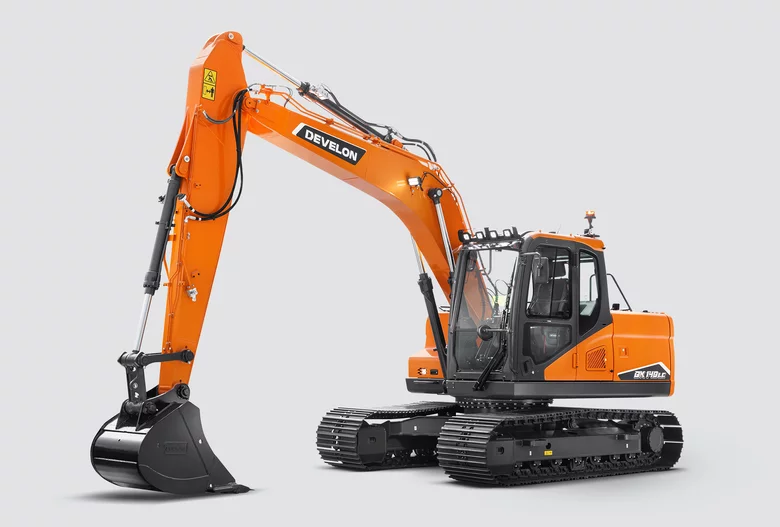
Also known as the hydraulic excavator or excavator, the crawler excavator is an essential piece of equipment on construction sites. Its power and versatility make it widely used across many sectors.
Designed for heavy-duty work, it stands out with a cab that can rotate up to 360 degrees, allowing for exceptional freedom of movement. It can also be fitted with a variety of interchangeable tools, making it a true "tracked multi-tool", perfectly suited for unstable or hard-to-access terrain.
This adaptability grants it excellent maneuverability, significantly superior to that of a backhoe loader, which has more limited movement range. It is this enhanced mobility that makes the crawler excavator a key asset on modern construction sites.
- The Origins of the Crawler Excavator
- Various Applications of the Excavator on Construction Sites
- Technical Specifications of the Crawler Excavator
- Safety Precautions and Risks Associated with Its Use
- Leading Brands in Crawler Excavator Manufacturing
+ The Origins of the Crawler Excavator
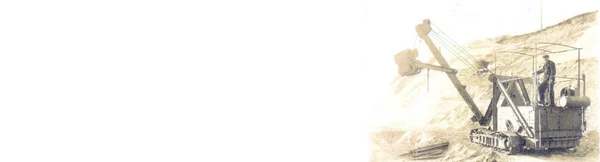
The history of the mechanical excavator dates back to the late 18th century, with the debut of the very first steam shovel in 1796. A major breakthrough came in 1839 with the patenting of the Otis steam shovel, equipped with a mechanized boom. This innovation quickly found its place in the booming construction and mining industries of the time.
Until the late 1800s, excavators were operated solely via chains or cables. In 1897, a turning point arrived with the invention of the first fully hydraulic control steam shovel, developed by the Kilgore Machine Co. in Minneapolis. During this period, excavators were mainly rail-mounted, which greatly limited their mobility — as evidenced by the machinery used to dig the Panama Canal in the early 20th century.
It wasn’t until the 1920s that the first modern excavators appeared, more similar to the ones used today. Manufacturers started producing models mounted on wheels or tracks, powered by gas engines, significantly enhancing site mobility. In 1925, the Bucyrus 120-B became the first excavator capable of a full 360-degree rotation, paving the way for a new generation of more agile and efficient machines.
During World War II, demand for such equipment surged. Mechanical excavators were extensively used for trench digging, and post-war, they played a crucial role in reconstruction efforts, contributing to the rapid modernization of infrastructure.
+ Diverse Applications of the Excavator on Site
The mechanical excavator is a staple on construction sites, particularly in building and public works sectors. Its presence is almost guaranteed when power and precision are required. What sets the excavator apart is above all its versatility. Indeed, there are many models with varied capacities, sizes, and functions, allowing it to adapt to a wide range of working environments.
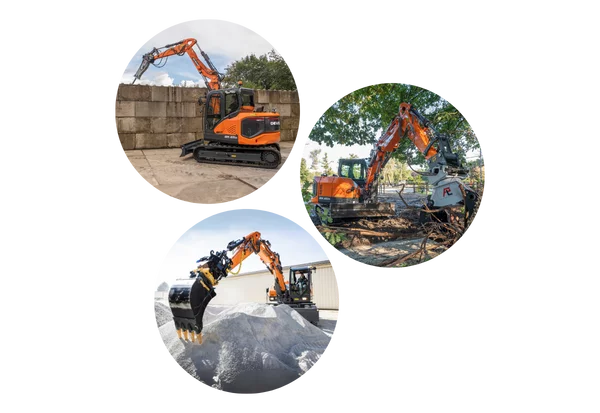
This versatility is further enhanced by the ability to be equipped with a broad array of tools. With these accessories, the excavator can easily switch functions depending on the needs of the site. Its uses notably include:
- earthmoving and drainage works
- demolition site interventions
- extraction in quarries
- various handling tasks (such as sorting or manipulating bulk materials)
- agricultural, forestry activities and landscaping work (for example, stump removal)
- digging wells, trenches, or ditches
- handling and lifting heavy loads
- underground work and deep interventions
+ Safety Precautions and Risks Associated with Its Use
Operating a crawler excavator requires not only experience but also thorough knowledge of safety regulations. This type of machine, often used on unstable or challenging terrain, exposes operators to several risks that must be well understood.
Hazards such as land collapse, proximity to buried or overhead electrical networks, and mechanical risks linked to equipment operation are threats that must be anticipated. To ensure a safe worksite and comply with legal safety obligations, it is strongly recommended that crawler excavator operators hold the CACES R372m category 2 (now replaced by CACES R482 category B1, according to the new classification). This certification verifies the operator's ability to safely handle hydraulic excavators over 6 tonnes. For mini crawler excavators under 6 tonnes, the category 1 CACES (R482 category A) is required. Mastery of this machine type is no accident: proper training is essential to prevent accidents and guarantee professional and responsible use on site.
+ Technical Specifications of the Crawler Excavator
The crawler excavator is one of the most powerful and stable machines in the public works equipment fleet. Unlike wheeled excavators, it is specifically designed to operate on complex, uneven, or unstable ground, such as muddy, sloped, or undeveloped sites.
Thanks to its tracked propulsion system, it offers excellent ground pressure distribution, enabling safe operation even in extreme conditions. Some crawler excavators can even be equipped with flotation systems, making them especially effective for work in wet or aquatic environments like ports, marshes, or ponds.
Highly valued for heavy earthworks, demolition, and quarry operations, the crawler excavator can accommodate a wide range of attachments. It can be fitted with backhoe or trenching buckets, hydraulic breakers, grapples, clamshell buckets, or dozer blades, making it an extremely versatile machine.
Thanks to this adaptability and its performance on challenging terrain, the crawler excavator is a preferred choice for BTP professionals seeking a reliable, stable machine capable of withstanding the toughest job sites.
Leading Brands in Crawler Excavator Manufacturing
Explore Our Range of Used Parts for All Brands