Used CATERPILLAR Pin
2 produits disponibles
Caterpillar pins are essential mechanical components for the proper operation of your excavators and construction machinery. Bucket, linkage, boom, arm, or hydraulic cylinders: their gradual wear can abruptly halt your on-site operations. Codimatra offers a selection of used pins recovered from end-of-life machines, inspected by our quality department and delivered with detailed maintenance history. Quickly obtain a personalized quote for your Caterpillar model.
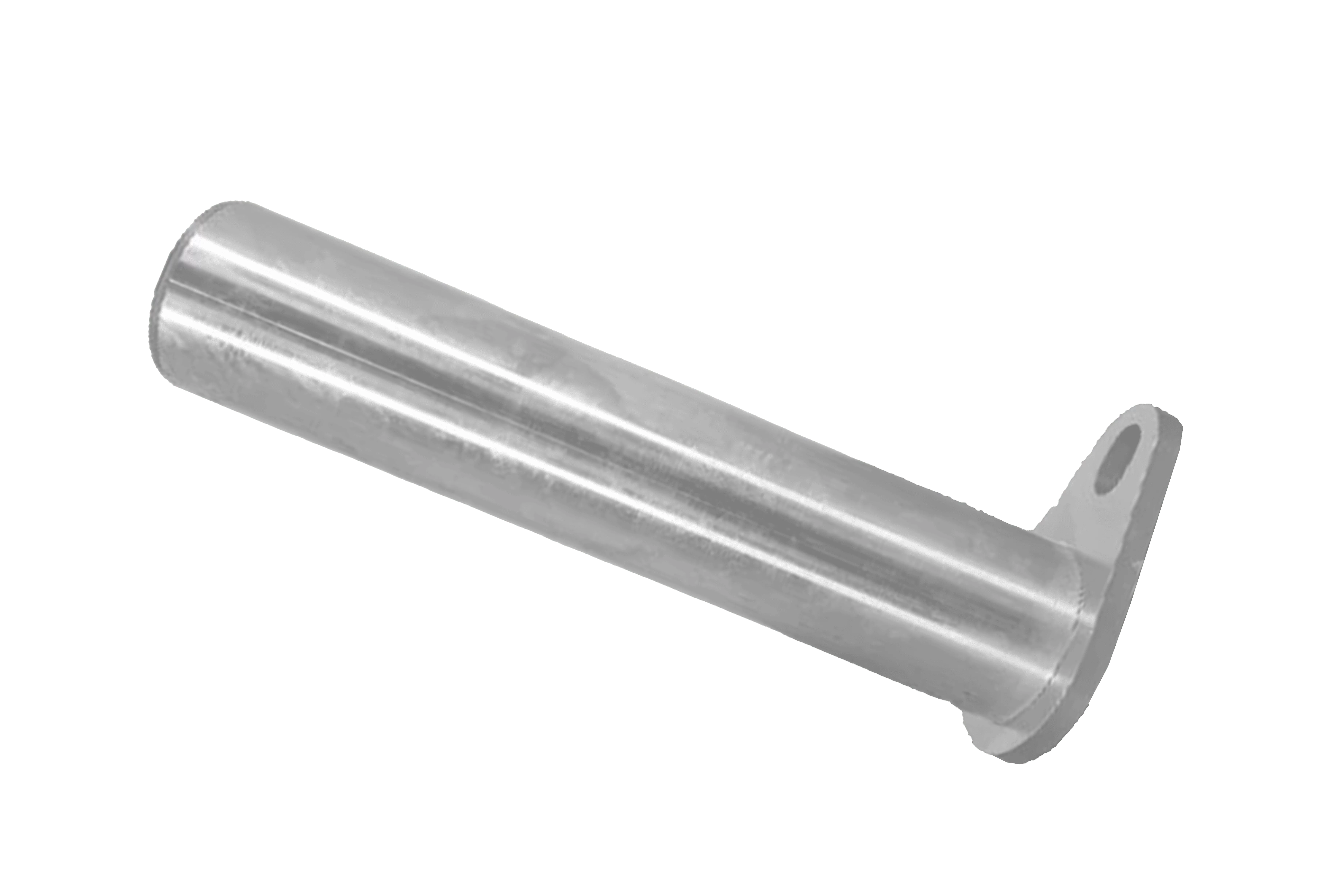
Used Caterpillar Pins: Reliable Construction Spare Parts for Your Machinery
Whether it's a pin and bushing kit for a CAT 308 mini excavator or a sprocket pin for a 330 excavator, Codimatra stocks a wide range covering an extensive array of references. Articulation bushings, often replaced simultaneously with pins, are also available.
Choosing used over new parts significantly reduces the cost of refurbishing a machine — sometimes saving up to 40% compared to original parts. A key advantage when multiple articulation points require attention simultaneously on the same site.
Buckets and Articulation Pins Available in Stock
- Bucket pins are among the most frequently used parts and are consistently available in our inventory.
- Linkage, boom foot, and arm pivot pins cover the main articulation zones of the excavator.
- Pins for hydraulic cylinders are also in stock: boom cylinder heads, cylinder rods, and arm cylinder heads.
- Each pin is made or selected from heat-treated steel, offering high surface hardness to resist abrasion.
- Common diameters available range from 45 mm to 90 mm, suitable for mini excavator models up to large CAT excavators.
- Thickness shims, dust seals, and spacer washers complete the references available for a full refurbishment.
- For machines equipped with quick couplers, specific pins compatible with leading manufacturers are also stocked.
Bucket and Linkage Pins for Excavators
On hydraulic excavators, bucket and linkage pins undergo much higher mechanical stresses than other articulation points. Each digging cycle focuses forces on these two areas, which explains their accelerated wear compared to the rest of the arm.
The linkage pin, in particular, directly transmits the bucket cylinder’s force: excessive play here immediately results in reduced precision during fine earthmoving or grading operations.
Delaying replacement also worsens wear on adjacent bushings, turning a simple repair into a more costly intervention. Acting at the first sign of play — metallic noise, unwanted bucket movement — helps limit damage to surrounding parts.
Boom, Arm, and Hydraulic Cylinder Pins
- The boom foot supports the full weight of the arm and bucket, subjected to constant cyclic loads in construction environments.
- The arm pivot pin, known as the boom nose, connects the boom and arm, a zone particularly exposed to torsion.
- A degraded boom cylinder pin causes uncontrolled arm descent, making the machine dangerous to operate.
- Arm cylinder head and bucket cylinder pins require precise dimensional adjustment to ensure hydraulic circuit sealing.
- Unlike bucket pins, boom and arm pins wear more slowly but their replacements are technically more complex.
- Wear at the boom foot often appears as visible lateral play during idle turret rotations.
- Used cylinder pins available from Codimatra are selected according to diameter, length, and original manufacturer reference.
Caterpillar Models Compatible with Our Pins
Codimatra covers a range of over 80 Caterpillar references, from compact mini excavators to large construction excavators. Whether you operate a 307C in urban works or a 345B in a quarry, pins matching your machine can be found in our catalog.
The B, C, D, L, N, and E series are all represented, reflecting broad generational coverage. Aging 320B or recent 330D models can benefit from the same guarantees of dimensional compatibility.
For each model, the original manufacturer reference remains the primary selection criterion, ensuring a precise fit within fractions of a millimeter on the concerned joints.
Mini Excavators: Series 301 to 308 and 963
- CAT mini excavators from series 301 to 308 and 963 are all listed in our used pin catalog.
- Models 301.8, 302.5, 302.5C, 307C and 308C are the most frequently requested in this compact range.
- On these smaller machines, bucket pins wear very quickly due to repeated digging cycles in confined spaces.
- Pin and bushing kits for mini excavators include bushings, washers, dust seals, and pins adapted to each sub-model.
- The machine serial number is essential to identify the exact reference, especially for 302.5 and 302.5C models.
- For mini excavators equipped with a Morin or equivalent quick coupler, specific dedicated pins are available on request.
- Pin diameters in this range are generally smaller than those on construction excavators, typically between 25 and 50 mm.
Medium and Large Excavators: 312 to 390
Excavators from the 312 to 390 range form the core of earthmoving fleets in France. Models 320B, 320C, 320D, 325B, 330B, 330C, 345B, 365B, and 385C represent the bulk of pin requests at Codimatra for mid to heavy construction machinery.
From the 320 series, pin diameters commonly range from 80 to 100 mm, compared to 25 to 50 mm on mini excavators. This size increase reflects much higher workloads: a 330D in a quarry endures cyclic stresses far beyond those of compact urban machines.
The B, C, and D series are all covered, including long versions (320BL, 330BL) and special editions (320BS, 330CLN). For these machines, the original manufacturer reference remains the only reliable criterion to ensure perfect dimensional fit.
Caterpillar Telehandlers and Construction Equipment
- Caterpillar telehandlers use telescopic boom pins subjected to heavy and repeated lifting loads.
- On CAT wheel loaders, bucket and tilt cylinder pins wear rapidly due to intensive loading cycles.
- Caterpillar bulldozers, such as the D6 or D8, require blade and tilt cylinder pins with specific dimensions.
- CAT compactors and graders feature chassis articulation pins directly exposed to vibration and mud.
- For these non-excavator construction machines, pins recovered from end-of-life equipment are geometry-checked before sale.
- A CAT TH357 or TH408 telescopic forklift requires boom pins with profiles completely different from hydraulic excavators.
- Contacting us with the exact machine designation helps quickly identify the suitable part from our available stock.
Why Choose a Codimatra Used Caterpillar Pin?
Each used pin offered by Codimatra comes from dismantled end-of-life machines and undergoes strict quality control focusing on geometry, surface condition, and dimensional measurements. A complete file documenting the maintenance history and operating hours systematically accompanies every part, allowing evaluation of its remaining potential even before installation.
The savings compared to a new original part are substantial, with no compromise on operational reliability. For fleet managers overseeing multiple CAT machines simultaneously, it's a direct lever on maintenance costs.
Immediate stock availability minimizes machine downtime to the bare minimum. Obtaining a personalized quote is as simple as providing the machine designation and part reference to start the process.
On a Caterpillar excavator, the pin is the articulation part connecting the different elements of the machine's arm: bucket, arm, boom, and cylinders. Without it, no movement is possible, whether digging, grading, or loading. Subjected to intense mechanical stresses daily, pins gradually wear and must be replaced to prevent any imbalance or work stoppage.
Each used Caterpillar pin undergoes a thorough validation by Codimatra’s quality department before being listed for sale. Technicians check alignment, sealing, and condition of contact surfaces. The part is accompanied by a complete file documenting its maintenance history and hours of service, ensuring full traceability for the buyer.
To find the exact reference, have your machine’s serial number and Caterpillar model ready (for example, 320D, 330C, or 349E). The pin’s position matters too: bucket, linkage, boom foot, or arm pivot have different dimensions. If in doubt, Codimatra’s team can help identify the right part based on this information.
To remove the boom from a Caterpillar mini excavator, start by placing the bucket on the ground and releasing hydraulic pressure. Then remove the boom foot pins by driving out the retaining pins using a hammer and pin punch. Disconnect the hydraulic hoses of the cylinders before removing the boom. Using a support or sling is recommended to hold the assembly during the operation and prevent any accident.
To receive a personalized quote, visit the Codimatra.com platform and fill out the online request form specifying your machine’s designation and the part needed. The team processes each request promptly and sends you an offer tailored to your requirements. You can also contact Codimatra by phone for a direct exchange with a construction spare parts specialist.