Construction Equipment Belts: How to Recognize Wear Signs
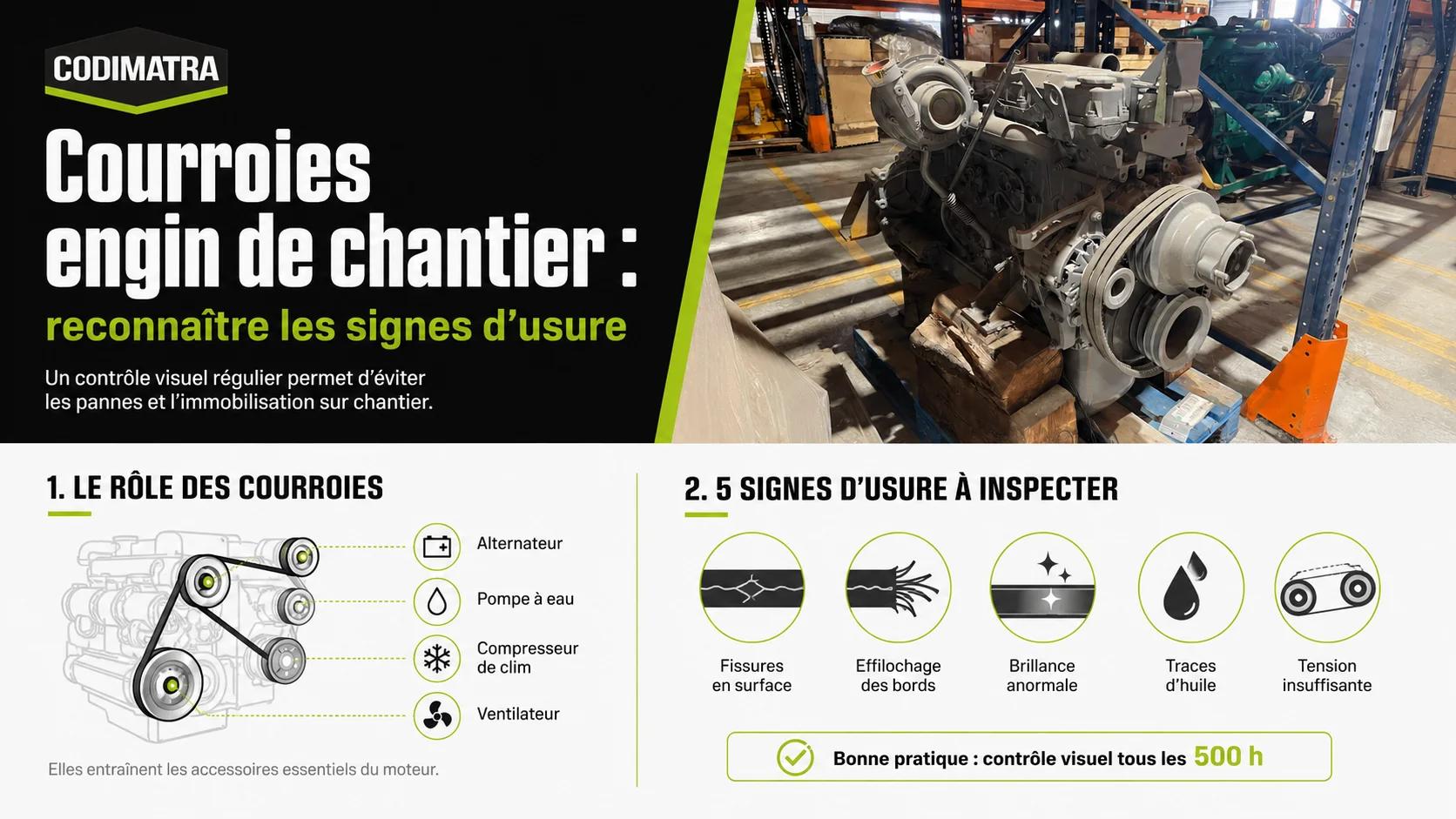
On construction equipment, engine belts drive several critical components: the alternator, water pump, air conditioning compressor, and the fan. Their condition directly impacts the machine's availability on site. Dust, temperature fluctuations, and constant mechanical stress accelerate their wear. Being able to identify early signs of wear allows intervention before failure, preventing costly downtime during operations. For over 40 years, Codimatra has offered tested and inspected used parts for construction machinery from all major brands.
The Role of Belts in Construction Equipment Engines
Different types of belts are among the most heavily used wear parts in the engine assembly. They continuously transmit mechanical energy from the crankshaft to various engine accessories. Without them, the used alternator no longer charges the battery, the used water pump stops circulating coolant, and the fan becomes less effective.
On construction machinery, two main types of drive belts are commonly used: V-belts, the most widespread on construction engines, and toothed (or timing) belts, which ensure synchronized transmission without slipping. Timing belts, however, form a separate category: they control engine timing and require replacement at strict intervals defined by the manufacturer.
Belts on construction equipment operate under particularly demanding conditions: high temperatures under the hood, constant vibrations, abrasive dust, and frequent start-stop cycles. Their lifespan depends directly on usage conditions and regular inspections.
Wear Signs to Check on an Engine Belt
- Surface Cracks: The rubber degrades over time, showing transversal cracks—a sign of advanced aging.
- Frayed Edges: Reinforcement fibers become visible on the belt’s sides, often indicating pulley misalignment or excessive groove wear.
- Unusual Shine: A glossy belt has lost adhesion, slipping on pulleys and failing to transmit force properly.
- Flattened or Deformed Areas: Belts left stationary for long periods can deform locally, causing jerky operation.
- Oil or Fluid Contamination: Leakage on the belt deteriorates rubber quickly and reduces friction.
- Insufficient Tension: An overly loose belt vibrates and snaps during acceleration, accelerating wear on itself and pulleys.
Risks of Using a Worn Belt
A slipping belt no longer ensures effective power transmission. The alternator charges the battery less efficiently, potentially causing long-term electrical issues. The water pump loses flow, leading to higher engine temperatures. If the fan is belt-driven, the used radiator is subjected to increased strain.
A complete belt failure or total tooth wear has immediate consequences on all belt types: the machine stops, certain systems fail, and urgent on-site repairs become necessary. A belt breaking unexpectedly can quickly cause engine overheating if the cooling system stops working.
When to Replace: Thresholds to Follow
The appearance of a single visible sign justifies replacement. A belt showing cracks, fraying, or loss of grip should not wait until the next scheduled maintenance. Premature wear often occurs when tensioners are neglected or the pulley is misaligned; addressing these causes prevents consecutive belt failures. The cost of a used belt is negligible compared to engine overheating or a depleted battery on site.
For Komatsu, Caterpillar, or Volvo machines, manufacturer-recommended replacement intervals represent a minimum standard. Under intensive site conditions or very dusty environments, it’s advisable to shorten these intervals and include belt inspections in every planned maintenance.
Used Engine Belts and Accessories Available at Codimatra
With over 40 years of expertise in used spare parts for construction equipment and approximately 17,000 references available, Codimatra supports construction professionals in maintaining their machinery fleets. Each part is dismantled, inspected, and tested in our workshop before shipment.
- Used alternators: Directly driven by the belt, these must be inspected and replaced if necessary during any belt service.
- Used water pumps: Their wear can accelerate if the belt is poorly tensioned or defective, impacting the cooling circuit.
- Used radiators: In cases of overheating caused by a broken belt, radiators face significant thermal stress possibly requiring replacement.
- Parts for all major brands: Codimatra covers a broad range of references for Komatsu, Caterpillar, Volvo, Hitachi, and all construction equipment manufacturers active on French sites.
Need a part quickly? Call Codimatra
A visual inspection reveals main wear signs: transverse cracks on the back of the belt, frayed sides, unusual gloss, or contamination by fluids. Squealing at startup or acceleration also indicates slipping or insufficient tension. For toothed belts, check the tooth condition as they can wear or deform. Presence of any of these signs means replacement is required before the next machine use.
On construction equipment, the lifespan of V-belts or toothed belts generally ranges between 1,000 and 3,000 hours depending on usage, transmitted load, and inspection regularity. Manufacturer recommendations specify intervals for each model. Under intensive site use or dusty environments, anticipate replacement before these thresholds and simultaneously check tensioners and pulleys.
Practically, tracking operating hours is the most reliable method for construction machinery. Record date and running hours at each replacement in the maintenance log and compare with manufacturer guidelines. Belt manufacturers provide charts based on rotation speed, pulley diameter, and load for more precise calculations. On site, visual checks every 500 hours remain the best indicator of premature wear.
Visual inspection should be included in every maintenance operation, at least every 500 hours. Replacement intervals vary by manufacturer and model: consult your machine’s service manual for guidance. For intensive use or very dusty conditions, shorten intervals and systematically check tensioners and pulleys simultaneously.
Engine belts are among the easiest wear parts to monitor and least costly to replace. Regular checks, integrated into every maintenance service, allow timely replacement and help avoid failures in the cooling system or battery charging. Replacing belts at the right time and simultaneously checking driven components extends the engine group’s service life and limits downtime on your sites.