
How to Prevent Cold Starting Issues on Construction Equipment
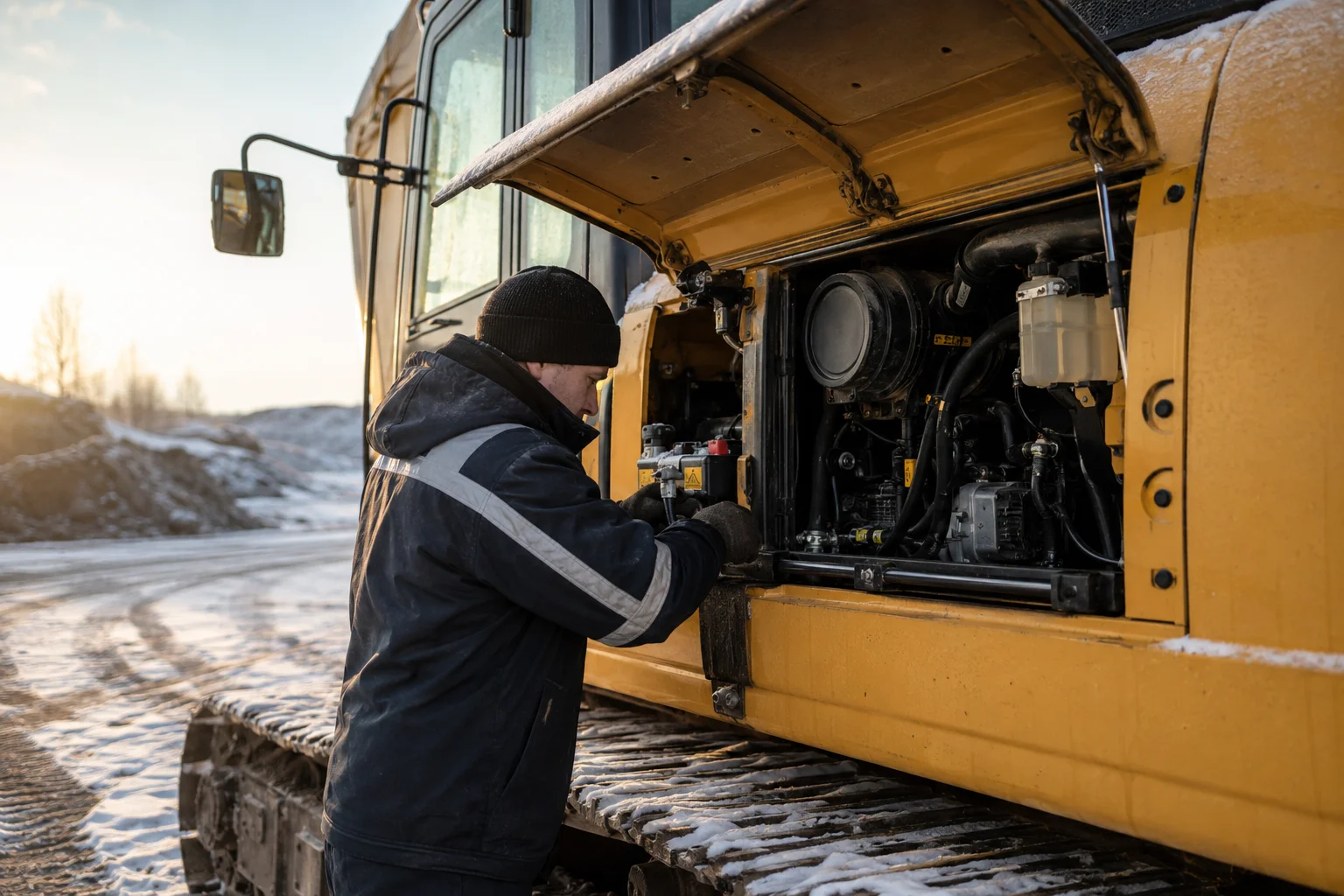
During winter, when temperatures drop significantly, construction equipment often faces cold start difficulties early in the morning. Winter is a tough challenge for your machinery: the battery, engine fluids, glow plugs, and fuel system are all affected simultaneously, often without warning signs. On a job site, a machine stuck first thing in the morning can quickly disrupt the entire day’s work schedule, delay tight deadlines, and require unplanned personnel interventions. Understanding the causes of starting issues, identifying vulnerable components, and performing some preventive checks before winter helps maintain machine availability throughout the cold season.
Cold Start Problems: Why Your Equipment Struggles to Start
Cold start difficulties are often due to several combined factors. The battery is the first component to check. When temperatures drop, its capacity decreases sharply: it can lose 30 to 40% of its power around 0°C. An old or partially discharged battery may no longer provide enough energy to properly power the starter.
Diesel fuel can also be the culprit. In cold weather, paraffin waxes in diesel can crystallize and gradually clog the fuel filter. This leads to an insufficient fuel supply, especially if summer diesel remains in the tank at the start of winter.
Finally, fluids and sensors also play a crucial role. Engine oil that is too viscous slows engine rotation and increases the starter's workload. A faulty temperature sensor can send incorrect data to the engine control unit, disrupting the starting process. When several of these issues coincide, the machine may struggle to start or become completely immobilized.

Key Components Most Affected by Diesel Cold Start
- Battery: Battery charge drops rapidly in cold conditions, especially if it’s over three years old or partially discharged. A real capacity test in a workshop before winter is far more reliable than a simple no-load voltage check, which can appear satisfactory even if the battery is weakened.
- Glow plugs: On diesel engines, glow plugs heat the combustion chamber in the seconds before starting. They are essential below freezing: a worn glow plug prolongs or completely prevents starting when ambient temperatures are very low. Their lifespan is limited, and they are often overlooked during routine maintenance.
- Starter: The used starter faces intense strain during difficult cold starts. An operator attempting multiple successive starts on a reluctant machine risks damaging a starter already weakened, turning a simple battery issue into two simultaneous failures to manage.
- Alternator: In winter, the used alternator must recharge an overworked battery while powering additional electrical equipment: cabin heater, wipers, enhanced lighting. A loose alternator belt or a worn alternator may no longer handle increased current demands.
- Engine temperature sensor: A faulty sensor sends erroneous data to the electronic control unit and can disrupt cold start fuel enrichment, making the machine’s behavior unpredictable in severe cold.
- Fuel filter: Summer diesel can partially gel at slightly below freezing temperatures, clogging the filter and progressively starving the fuel injection system. The filter is often the first part replaced during winter fuel supply issues.
Cold Weather Start Checks to Conduct Before Winter
To prevent cold start difficulties, preventive checks in autumn are much more effective than emergency repairs on site at -5°C. Ideally, these checks should be performed by late October, before the first freezes, giving you time to order and install necessary parts without rush.
The battery must undergo a real capacity test, not just a no-load voltage measurement. Any battery with less than 70% of nominal capacity should be replaced. This threshold may seem conservative, but winter failures often occur at this point: the battery functions the rest of the year but fails at the first major cold snap. The glow plug system should also be inspected: glow plugs have a limited lifespan measured in years or starting cycles. Checks are quick, and replacement costs are minimal compared to losing a day’s work on site.
Fuel is an often overlooked point until the first failure. Switching to winter diesel or using an anti-gel fuel additive from November prevents paraffin wax formation in the fuel system. Also, remember to drain water that may have accumulated in the fuel filter—water can freeze inside the filter, blocking fuel supply. Finally, check your windshield and wipers, as visibility is a safety priority on your machinery in winter, and parking your vehicles indoors overnight reduces their exposure to the coldest temperatures.
Good Practices to Adopt Before the Cold Season
- Test the battery and check its charge before the first cold spells, ideally with a real capacity tester.
- Inspect glow plugs during autumn servicing and replace them if necessary.
- Switch to winter diesel or use an anti-gel fuel additive starting in November.
- Drain water from the fuel filter before the first freezes.
- Check engine oil viscosity and ensure it is suitable for your region’s winter weather conditions.
- Inspect alternator belt tension and overall condition of the electrical charging system.
- Check windshield and wipers to ensure good visibility on the equipment.
- Park your equipment indoors overnight when possible to reduce exposure to extreme cold.
Choosing the Right Fluids for Diesel Cold Starts
Fluid selection is often underestimated in winter preparation for construction equipment. Engine oil is the first factor to check. An SAE 15W-40 lubricant, suitable for temperate seasons, can become too viscous in severe cold, increasing resistance at start-up. An SAE 5W-40 or 5W-30 "multigrade winter" oil maintains sufficient fluidity at low temperatures while providing engine protection at operating temperature. Consult your equipment workshop manuals for manufacturer recommendations according to temperature ranges.
Antifreeze also deserves attention. Insufficient antifreeze concentration can cause coolant system freezing, imposing significant stresses on the engine block at startup. A refractometer check of glycol concentration verifies actual protection level, usually expressed as the lowest temperature (in degrees Celsius) at which it remains liquid. For fleets exposed to very low temperatures, protection down to -30°C is recommended.
Hydraulic fluids are also involved. Hydraulic fluid with inappropriate viscosity for cold will flow less easily through circuits, slowing warm-up and initial machine movements. Some manufacturers offer hydraulic oils with broad viscosity ranges specially designed for winter use in extremely cold regions.
What to Do If Your Machine Won't Start Despite Preheating?
Despite all precautions, starting failures may occur. Here are the steps to take to address the issue without worsening the situation.
- Avoid repeated prolonged start attempts: each failed attempt discharges the battery further and strains the starter. Limit each try to a few seconds and wait at least thirty seconds between attempts.
- Check the battery first: use a voltmeter to measure voltage. Below 12 V at rest, the battery is insufficiently charged to start a cold diesel engine.
- Use a charger or booster: a charger connected for a few hours or a jump starter can often get the machine running again. Observe correct polarity and consult the manual if the equipment has sensitive electronic systems.
- Warm the engine environment if possible: a simple portable heater in an enclosed space or a heated blanket on the engine hood can be enough to start the machine when temperatures are very low.
- Do not force starting if the machine seems mechanically blocked: if the starter turns with difficulty or makes unusual noises, stop attempts and have the machine diagnosed before causing further damage to the used starter or other components.
Cold Starting Issue? Contact Our Experts
Diesel Start Accelerator: Best Practice or Engine Risk?
Some operators press the accelerator during startup to help the engine fire in cold weather. This habit, inherited from older carburetor engines with a mechanical choke, is actually discouraged on modern diesel engines. Accelerating during a cold diesel start injects more fuel into a combustion chamber that is not yet at optimal temperature. This excess may not burn completely and deposits soot or varnish on cylinder walls and valves, fostering premature wear and long-term engine performance degradation.
The proper practice is to wait for the glow plug indicator to go out before starting diesel engines, then let the engine idle for two to five minutes without applying load. This gradual warm-up allows engine oil to circulate properly through the lubrication system, mechanical clearances to reach nominal values, and hydraulic fluid to regain optimal fluidity before commanding the first movements. This warm-up time is not a constraint but an investment in the longevity of your construction equipment.
Wait for the glow plug indicator to go out before starting. On most modern diesel machines, this indicator lights for a few seconds when the ignition is turned on, then goes out once the glow plugs have heated the combustion chamber. Then start the engine and let it idle for two to five minutes without operating hydraulics or machine movements. This gradual warm-up allows engine oil to circulate properly throughout the system and the hydraulic circuit to reach full effectiveness. Avoid sudden acceleration during the first minutes, especially in subzero temperatures.
On older carbureted engines, the starter choke enriched the air-fuel mixture to facilitate cold starts by reducing air intake and increasing fuel proportion. On modern diesel construction equipment, this role is served by two elements: glow plugs, which directly heat the combustion chamber in the seconds before starting, and the electronic control unit, which automatically adjusts fuel quantity based on engine temperature sensor data. These electronic systems have made mechanical starters obsolete on recent machines.
A cold start puts high stress on the engine because the oil has not yet reached operating viscosity, and mechanical clearances vary when cold. If the start is forced with a weakened battery, an overstrained starter, or insufficient preheating, mechanical stresses accumulate on insufficiently lubricated parts. Repeated difficult starts under poor conditions can accelerate wear on piston rings, crankshaft bearings, and engine timing components. In severe cases, Codimatra stocks used thermal engines, sold as-is, for situations requiring a complete replacement.